📖 The Story
The Story: On March 28, 2026, Mary Beth Hurt died at 79 in an assisted-living facility in Jersey City, New Jersey, after a decade-long battle with Alzheimer's disease. She had been diagnosed in 2015.
Born Mary Beth Supinger in Marshalltown, Iowa — where her childhood babysitter was future film star Jean Seberg — Hurt studied drama at the University of Iowa and NYU's Tisch School of the Arts before making her New York stage debut in 1973. Over the next five decades, she earned three Tony nominations, a BAFTA nomination, and built a career that spanned Woody Allen's "Interiors" (1978), "The World According to Garp" (1982), Martin Scorsese's "The Age of Innocence" (1993), and "Six Degrees of Separation" (1993). She was selective about her work — telling the New York Times in 1989: "Fifty percent of the roles I'm offered in films are nothing. I don't mean sizewise. There's nothing of any interest in them."
She married filmmaker Paul Schrader in 1983, and they shared 43 years together, raising daughter Molly and son Sam. Schrader, who has been open about how Hurt saved him from his struggles with drugs and alcohol, moved her to a care facility in 2019 — then brought her back to their New York lake house during the pandemic, where he built her a greenhouse because she loved gardening. "She was an actress, a wife, a sister, a mother, an aunt, a friend, and she took on all those roles with grace and kind ferocity," their daughter Molly wrote.
There's a cruel poetry in an actress losing her memory. A woman who spent her career disappearing into other people — wearing their accents, inhabiting their pain, becoming someone new every opening night — now disappearing from herself. The same gift that made her extraordinary on stage became a metaphor for the disease that took her: she was always someone else, and now she's no one at all.
When we saw this story, we found something that transcends Hollywood obituaries. This is about everyone who has sat beside someone they've loved for decades and watched them look back with polite blankness — kind, but unfamiliar. It's about the husband who still reads the old reviews out loud, whose voice cracks on the word "luminous." It's about the wedding ring that still knows the finger even when the eyes don't know the face.
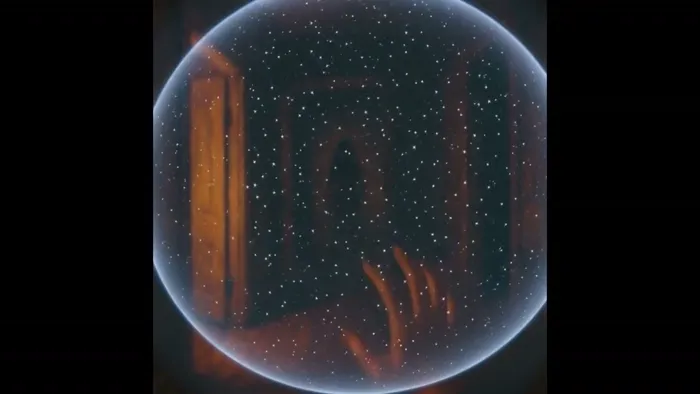
We wrote it as a dark americana elegy — sparse piano, cathedral reverb, the kind of music that leaves room for silence — because grief this intimate doesn't need volume. It needs space. The repeating hook, "Every room goes dark," mirrors how memory loss works: not all at once, but room by room, light by light, until you're standing alone in a house full of locked doors.
📚 Explore the musical DNA: Music Theory Deep Dive — how sparse arrangement, cathedral reverb, and repetition architecture mirror the experience of memory loss.
Sources:
- New York Times: Mary Beth Hurt, Actress Acclaimed in 'Interiors' and 'Garp,' Dies at 79
- The Guardian: Mary Beth Hurt, star of Interiors and The World According to Garp, dies aged 79
- Deadline: Mary Beth Hurt Dies: 'The Age of Innocence' Actress Was 79
- Los Angeles Times: Mary Beth Hurt, 'Interiors' and 'The World According to Garp' actor, dies at 79
💜 Emotional Core
🌊 Metaphor Seeds
🎸 The Sound
Nick Cave gravitas meets Johnny Cash restraint. Sparse piano, fingerpicked acoustic, cathedral reverb. The weight comes from silence and space, not volume. Intimate and devastating.
🔧 Techniques Used
✍️ Lyrical Style
- counter-emotion in bridge — shifts from grief to the mercy of letting go
- sensory anchoring — coffee smell, photographs losing color, voice cracking on "luminous"
Impressionistic poetry with dense imagery — each verse paints a scene rather than telling a linear story. The repetition of "Every room goes dark" builds emotional weight with each return, while the poetic vocabulary creates layers of meaning (accents as perfume, faces bleeding through glass, the quiet folding in).
🎶 Music Lessons Used
📝 Lyrics
She played a hundred women
Wore their accents like perfume
Every opening night, another life
Every closing, back to the room
She was so good at being others
The world forgot to learn her name
Now the irony is perfect —
She forgot it just the same
Who do you become
When the becoming's done?
Every room goes dark
Every room goes dark
The hallway and the kitchen hum
The garden and the gate
Every room goes dark
And I'm still standing here
Still calling through the silence
Where your name used to wait
The photographs are losing color
Faces bleeding through the glass
She smells the coffee but can't place it
Holds the cup like something passed
He reads her old reviews out loud
His voice cracks on the word luminous
She smiles at him like he's a stranger
Kind, but unfamiliar
Who do you become
When the becoming's done?
Every room goes dark
Every room goes dark
The bedroom and the morning light
The porch where autumn came
Every room goes dark
And I'm still standing here
Still calling through the silence
Where your name used to wait
She spent her whole life disappearing
Into someone else's skin
And now the cruelest disappearing
Is the one that's closing in
Her wedding ring still knows his finger
But her eyes don't know him
No stage, no script, no final bow
Just the quiet folding in
Every room goes dark
Every room goes dark
But I will sit in every one
And hold what's left of day
Every room goes dark
But I'm still standing here
I'll whisper through the silence
I remember — I remember
I remember for us both
I remember for us both
Even when you can't
I can
📚 Music Theory Deep Dive
Read the full breakdown of the sparse arrangement architecture, cathedral reverb as narrative device, repetition that mirrors memory loss, and how dark americana turns Alzheimer's grief into sound.
📖 Read: The Geometry of Disappearance