📖 The Story
The Story: Researchers working on AI-assisted science have been pushing beyond simple literature review toward systems that can generate, debate, rank, and refine research hypotheses. Google Research described its AI co-scientist as a Gemini 2.0-based multi-agent tool meant to help scientists propose novel hypotheses and experimental plans, with validation work focused on biomedical areas including drug repurposing, target discovery, and antimicrobial resistance.
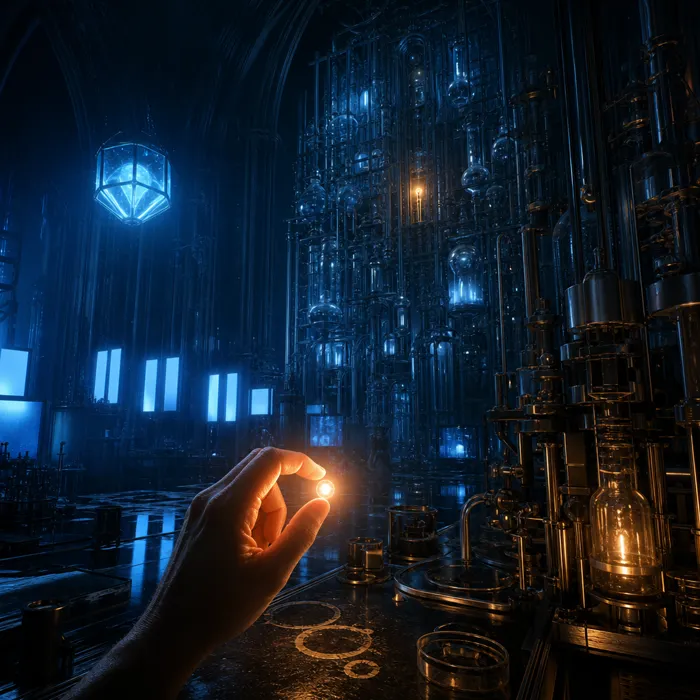
The technical paper, Towards an AI co-scientist, frames the system as a collaborative research aid rather than an autonomous replacement for scientists. Its reported biomedical examples include candidate ideas for acute myeloid leukemia, proposed epigenetic targets for liver fibrosis, and a parallel in-silico discovery related to bacterial evolution. That is the spark behind the song: not a magic cure, but another lantern carried into the enormous dark of medical uncertainty.
The Stanford connection matters because biomedical AI is not only about acceleration. Stanford HAI coverage on managing risks in AI-powered biomedical research emphasizes the other half of the story: AI can accelerate drug discovery and diagnosis, but it also creates misuse risks around privacy, bias, and even toxic molecule generation. The same machinery that can search a therapeutic space faster can also widen the consequences of bad incentives or weak guardrails.
That tension shaped the song. The waiting-room images — coffee rings, hospital-blue screens, borrowed breath — keep the story grounded in the people who need medical progress to arrive. The machine pulse belongs to the lab, but the chorus belongs to patients, families, and researchers who know that every hopeful result still has to pass through evidence, ethics, and care.
We wrote it as industrial synth rock because the subject has two hearts beating at once: the metronomic discipline of computation and the human urgency of illness. The bridge says the quiet part out loud: "Not a savior made of code / Just a lantern on a brutal road." The cure looking back is not a promise that the machine will save us. It is the moment when a search begins to reflect our fear, our responsibility, and our stubborn hope.
Sources:
💜 Emotional Core
🌊 Metaphor Seeds
🎸 The Sound
Industrial synth rock with pulsing sequencer, distorted bass, glitch percussion, clean baritone, layered gang vocals, cinematic bridge, and a science-lab atmosphere built around laboratory tension and human-centered release.
🔧 Techniques Used
✍️ Lyrical Style
- Repeated title hook
- Call-response lines
- Concrete waiting-room imagery
- Ethical bridge turn
The lyrics use the AI medicine story as a spark, but write the song as a waiting-room vigil: machines search, humans hope, and the chorus carries the emotional release.
📝 Lyrics
Who is there?
We are still here
Coffee rings like little moons
Outside the room with no good news
Every screen a chapel blue
Every breath a borrowed fuse
Not a prophet, not a throne
Just another hand through the unknown
The cure is looking back
Through the static, through the black
We lit one match in the server stack
Now the cure is looking back
Who is there? — We are still here
What do you see? — The shape of fear
Ten thousand doors in a chemical wall
Most of them empty, most of them fall
But one small key in the algorithm rain
Turns in the lock with a human name
Not a savior made of code
Just a lantern on a brutal road
The cure is looking back
Through the static, through the black
We lit one match in the server stack
Now the cure is looking back
Who is there? — We are still here
What do you see? — The shape of fear
If the answer comes wearing a wire
If the mercy arrives as a spark
We will not bow down to the fire
We will carry it out of the dark
The cure is looking back
Through the static, through the black
We lit one match in the server stack
Now the cure is looking back
Who is there? — We are still here
What do you see? — A door appears
Not alone, not fading out
We are still here
The cure is looking back
The cure is looking back