
Songwriting Takeaway
- Two chords + incredible groove = timeless (see also: Jolene, What's Going On, HUMBLE.)
Mode
Groove Chrome
Texture
mirror ball
Application
A minor
Key: A minor
Chord Progression: Am7 -> D/A -> Am7 -> D/A (entire song) -- i7 -> IV/1 pedal vamp
Time Signature: 4/4 with four-on-the-floor disco pulse
Notable Techniques
- TWO CHORDS the entire song -- Am7 to D over A bass. The GROOVE carries everything, not harmonic movement
- Nile Rodgers' rhythm guitar is THE hook -- 16th-note "chucking" pattern, muted strings creating percussive scratch between chord hits
- Bass (Bernard Edwards) plays melodic COUNTERPOINT -- not just roots, actually SINGS against the vocals
- Four-on-the-floor kick with open hi-hat on every offbeat -- classic disco drive
- String section SWELLS on 1 of each 4-bar phrase -- creates breath/release in constant groove
- "FREAK OUT!" call-and-response -- participatory hook that works in any language
- Guitar sits in MID-HIGH frequencies -- leaves low end entirely to bass and kick
- Handclaps on 2 and 4 layered with snare -- thickens backbeat without muddiness
Emotional Effectiveness
- Born from REJECTION -- Rodgers and Edwards denied entry to Studio 54, went home angry, wrote it that night
- Original lyric was "Fuck off!" -- changed to "Freak out!" for radio (the anger is still there, disguised as joy)
- Repetition of hook creates TRANCE state -- you stop thinking, just move
- Minor key groove feels URGENT, not sad -- Am7 gives it edge that major key disco lacks
- The "freak" reclamation -- turning outsider status into celebration
- Call-and-response dissolves performer/audience boundary -- everyone's IN the song
Production Elements
- Recorded at Power Station, NYC with Rodgers/Edwards producing
- Bob Clearmountain mixing -- crisp, punchy, defined
- Bass is DI'd, clean, sits at 80-150Hz -- melodic but foundational
- Guitar through a small amp, close-mic'd -- crisp without muddiness
- Kick drum has CLICK (5kHz boost) plus BOOM (80Hz) -- cuts through on any speaker
- Strings recorded with room mics for natural reverb -- warm, not synthetic
- Mix is WIDE -- guitar panned one side, its double panned opposite
- Master has space -- not slammed. Dynamics preserved for dancefloor
Songwriting Tricks
- TWO CHORDS IS ENOUGH (validated pattern: Jolene, HUMBLE., What's Going On)
- Write from emotion -- rejection/anger became celebration. Transmute feeling, don't suppress
- Pedal bass (A stays constant while D chord moves above) -- creates tension without harmonic movement
- Call-and-response hooks = instant audience participation
- Nonsense syllables work ("Freak out!" "Ahhhh") -- rhythm > meaning
- Minor key + major feel = sophisticated dance music
- The GROOVE is the song -- chords and melody serve the pocket, not reverse
- Repeat until it becomes mantra -- "Le Freak, c'est chic" 50+ times
The "Chucking" Guitar Technique
- Left hand mutes strings between chord voicings -- creates "chicka-chicka" scratch sound
- Right hand plays CONSTANT 16th notes -- never stops
- Some strokes hit muted strings (scratch), some hit chords (melody)
- Creates drum-like rhythm from guitar -- Nile essentially plays PERCUSSION
- This technique defined disco AND later funk, hip-hop sampling, house music
- LESSON: Guitar doesn't have to play chords OR melody. It can be RHYTHM SECTION
The Bernard Edwards Bass Philosophy
- "The bass line should be able to stand alone" -- Edwards
- Not just roots -- melodic phrases that RESPOND to vocals
- Syncopation against the straight kick drum = pocket creation
- High melodic figures (sometimes up at 12th fret) -- singing, not thumping
- THIS bass approach sampled by: Sugarhill Gang, Grandmaster Flash, Daft Punk
- LESSON: Write bass lines you could WHISTLE. If memorable = mission accomplished
The Studio 54 Origin Story
- Nile Rodgers and Bernard Edwards were on guest list for Studio 54, but denied at door
- "We're not letting in Black people tonight" -- paraphrased
- Went home, wrote "Fuck Off" to express rage
- Changed to "Freak Out" next morning -- kept the ENERGY, removed the explicit anger
- Song about exclusion became song of ULTIMATE inclusion -- everyone dancing together
- LESSON: Transmute negative emotion into art. The feeling stays, the bitterness transforms
Application to Our Work
- Two chords + incredible groove = timeless (see also: Jolene, What's Going On, HUMBLE.)
- Guitar as rhythm section -- "chucking" pattern creates hooks without melody
- Bass deserves melodic attention -- not just roots (see also: Billie Jean, Superstition)
- Minor key can be DANCEABLE -- Am7 gives edge without sadness
- Call-and-response creates participation -- audience becomes the song
- Write from emotion, especially rejection -- transmute don't suppress
- Repeat the hook into MANTRA -- hypnosis through repetition
- Pedal bass creates tension even with minimal chords
Contrast With Other Lessons
- Shares two-chord minimalism with "Jolene," "HUMBLE.," "What's Going On" -- groove > complexity
- Shares melodic bass with "Superstition," "Billie Jean" -- foundational funk principle
- Shares participatory hook with "Respect" (spelling), "Ms. Jackson" (ooh!) -- call-and-response
- Shares minor-key danceability with "Superstition," "When Doves Cry" -- dark grooves
- Opposite of Bohemian Rhapsody's complexity -- THIS is simplicity as mastery
- Bridges disco to hip-hop (most sampled artists) to house music (Daft Punk disciples)
- Shares "transmuted rejection" origin with punk rock ethos
Reference Links
- Le Freak on Apple MusicSong / recording search
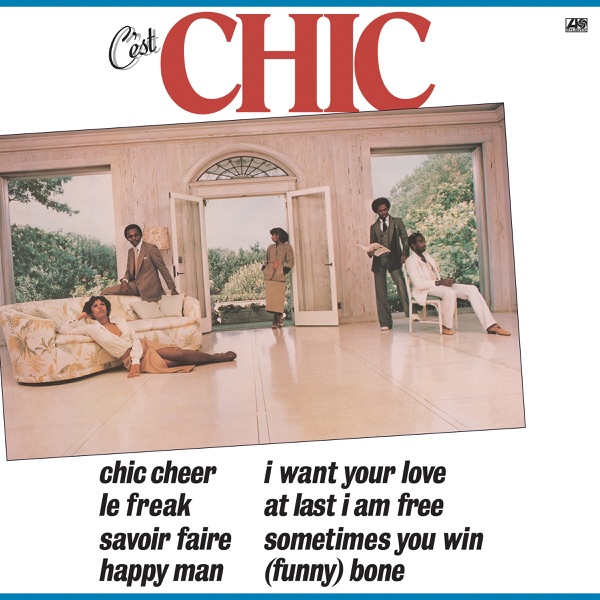
- C'est Chic (2018 Remaster) album referenceAlbum / artwork context
- Chic artist profileArtist background
- Le Freak on MusicBrainzRecording metadata
- Chic on MusicBrainzArtist metadata