
Songwriting Takeaway
- Title misdirection = powerful structural device -- set up one meaning, reveal another
Mode
Roots Grain
Texture
wood room
Application
G major
Key: G major
Chord Progression: G -> C -> D -> G (verse) -- I -> IV -> V -> I, textbook country with chromatic passing tones in bass
Time Signature: 4/4 with slow, stately waltz-like feel (~76 BPM) -- deliberate, funereal pacing
Notable Techniques
- THIRD-PERSON NARRATOR -- the story isn't told by the man or the woman, but by a FRIEND. Creates documentary distance that makes the reveal MORE devastating, not less
- Billy Sherrill's string arrangement SWELLS on emotional peaks -- Nashville Sound at its apex. Strings enter gradually, crescendo at the death reveal
- Jones's vocal phrasing sits BEHIND the beat -- unhurried, like a man who's been carrying this story for years and finally telling it
- Spoken recitation bridge ("she came to see him one last time") -- shifts from SINGING to SPEAKING. The drop to speech signals: this is too real to sing
- Chromatic bass walk-down (G -> F# -> F -> E -> D) -- descending line under verse creates inevitable downward pull (see also: Crazy, Ms. Jackson)
- Pedal steel guitar as EMOTIONAL COMMENTARY -- cries where Jones doesn't. The instrument weeps so the vocal can maintain dignity
- Jones's vibrato is CONTROLLED -- wide on sustained notes, tight on conversational lines. The variation IS the emotion
- Key modulation in final verse -- lifts a half-step (G to Ab) for the climactic reveal. Classic Nashville drama trick
Emotional Effectiveness
- The title IS the twist -- "He stopped loving her today" sounds like he moved on. The reveal: he DIED. The title recontextualizes everything
- "All dressed up to go away / First time I'd seen him smile in years" -- he's in a COFFIN. The smile is a rictus grin. Horrifying specificity disguised as gentle observation
- Third-person narration creates WITNESS quality -- we're hearing testimony, not confession
- The timeline spans DECADES -- "kept some letters by his bed / dated 1962" -- this isn't a breakup, it's a LIFE consumed
- "He said I'll love you til I die" in verse 1 becomes LITERAL by the end -- the promise was KEPT, just not how anyone wanted
- Jones HATED the song, thought it was too morbid. Recorded it reluctantly. His resistance to the material paradoxically gave the vocal RESTRAINT -- he's not milking it, he's almost fighting it
- The ex-lover comes to the funeral -- "we all wondered would she come" -- community watching, collective breath held
Production Elements
- Recorded at Columbia Studio B (the Quonset Hut), Nashville -- same room as "Crazy" (Patsy Cline). The room IS country music history
- Billy Sherrill producing -- architect of the countrypolitan sound alongside Owen Bradley
- Recording took 18+ MONTHS -- Jones was in bad shape (cocaine, alcohol). The recitation was recorded over a year after the first verse. Sherrill's patience = the record
- Jones kept singing the melody of Kris Kristofferson's "Help Me Make It Through the Night" instead of the correct tune -- Sherrill had to repeatedly correct him
- Strings are LUSH but never syrupy -- arranged to BUILD, not blanket. They swell TOWARD the reveal, not throughout
- Pedal steel sits in the MIX like a second voice -- not buried, not dominant. Partner to Jones
- Mix is WARM -- tube chain, natural room reverb from the Quonset Hut's rounded ceiling
- Jones's vocal is DRY and forward -- close-mic'd intimacy. You hear every breath, every micro-hesitation
- Bass plays quarter notes with chromatic passing tones -- steady as a heartbeat, descending as a life
Songwriting Tricks
- TITLE AS MISDIRECTION -- "He Stopped Loving Her Today" sets up expectation of healing. The reveal (death) INVERTS the meaning. Relistens hit harder because the title is now ironic AND literal
- Third-person narrator adds OBJECTIVITY -- a friend's account feels more trustworthy than the lover's
- Spoken recitation for the most emotional moment -- when words become too heavy to SING, speak them. The shift signals climax
- Timeline progression through SPECIFIC DETAILS -- "1962," "letters by his bed," "underlined in red every single I love you" -- concrete, not abstract
- Kill the character at the RIGHT moment -- Bobby Braddock and Curly Putman rewrote the death scene MANY times. Sherrill had "a notebook an inch thick" of rewrites. The placement of death in the narrative is EVERYTHING
- Chromatic descending bass for inevitable tragedy (validated: Crazy, Ms. Jackson, Billie Jean)
- Key change (modulation UP) for final emotional push -- half-step lift creates physical LIFT when the story needs it most
- The song the ARTIST hates can be the masterpiece -- Jones called it "that morbid son of a bitch." Won him the Grammy, saved his career
The Third-Person Narrator Lesson
- First-person: "I stopped loving her" -- self-pity, audience resists
- Second-person: "You stopped loving her" -- accusation, audience defensive
- Third-person: "HE stopped loving her" -- observation, audience LEANS IN
- The narrator is a WITNESS -- adds credibility. "I went to see him just today" = reporting, not performing
- Creates dramatic irony -- narrator knows the ending, parcels out information strategically
- Same technique: "Eleanor Rigby" (Beatles), "The Night the Lights Went Out in Georgia"
- LESSON: For tragedy, consider third-person. Distance creates impact, not detachment
The Spoken Recitation
- Country tradition: spoken "talking" sections in the middle of songs (see: Red Sovine, Jimmy Dean)
- "She came to see him one last time / Oh, and we all wondered would she come" -- SPOKEN, not sung
- The shift from melody to speech signals: this is TOO REAL for music
- Recitation sits lower in dynamic -- intimate, confessional, like leaning in to tell a secret
- Jones recorded this section 18 months after the verses -- different session, different state of mind
- LESSON: A spoken bridge in an emotional song = power move. The contrast highlights both the singing and the speaking
The "Greatest Country Song" Argument
- Voted #1 country song of all time by virtually every survey: CMT, Rolling Stone, Billboard
- Why? STRUCTURE + PERFORMANCE + PRODUCTION aligned perfectly
- The TWIST is literary, not gimmicky -- it earns its reveal through patient storytelling
- Jones's voice at this specific moment in time -- ravaged by addiction, barely holding on -- gave it truth no healthy singer could replicate
- Sherrill's production elevated a three-chord song to CINEMA
- The song saved Jones's career -- "a four-decade career salvaged by a three-minute song"
- Added to Library of Congress National Recording Registry (2008)
- LESSON: Perfect storm: right song + right singer + right moment + right producer. You can't engineer this, but you can be READY when it happens
The Billy Sherrill Production
- Sherrill = countrypolitan's other architect (alongside Owen Bradley who produced "Crazy")
- His method: start with core band (guitar, bass, drums, piano, steel), record live. THEN add strings, horns in overdubs
- Strings aren't decoration -- they're NARRATIVE devices. Enter when emotion demands, swell at climax
- He waited OVER A YEAR for Jones to be capable of singing the final version -- patience as production tool
- "I always thought of myself as a filter. The song comes through the artist, through the musicians, through me. I just try not to mess it up" -- Sherrill
- LESSON: The producer's job is sometimes to WAIT. The right take at the wrong time = nothing. The right take at the right time = history
Application to Our Work
- Title misdirection = powerful structural device -- set up one meaning, reveal another
- Third-person narration for tragedy -- distance creates impact
- Spoken recitation for emotional climax -- the shift from singing to speaking signals gravity
- Specific timeline details (dates, objects) ground abstract emotion in reality
- Chromatic descending bass lines for inevitable tragedy (pattern validated across genres)
- Key modulation UP for final emotional push -- standard but effective
- The artist's resistance to material doesn't predict quality -- trust the song, not the feeling about the song
- Patient storytelling > immediate gratification. Earn the reveal
- Strings as narrative device -- enter WHEN the story demands, not from the start
- Sometimes the best vocal performance comes from a broken person -- pain creates truth
Contrast With Other Lessons
- Shares Nashville Sound production with "Crazy" (Owen Bradley) -- same studio, same philosophy, different decades
- Shares chromatic bass descent with "Crazy," "Ms. Jackson," "Billie Jean" -- universal melancholy device
- Shares spoken recitation tradition with country roots (Red Sovine) and hip-hop interludes
- Shares "artist hated it" origin with "Crazy" (Patsy initially refused) -- producer persistence = greatness
- Shares third-person narration with "Eleanor Rigby," "Papa Was a Rollin' Stone" -- witness as storyteller
- Shares key modulation for climax with gospel tradition, power ballads
- Shares "song saved career" narrative with B.B. King's "Thrill Is Gone" -- both artists at low points, one song changed everything
- Opposite of minimalism trend (Jolene, HUMBLE.) -- THIS is maximalist Nashville production serving a simple story
- Shares long production timeline with "Bohemian Rhapsody" -- great records sometimes take time
- Shares vulnerability-through-restraint with "Dock of the Bay," "Ain't No Sunshine" -- quiet devastation > loud despair
- Country's answer to the question "can a three-chord song be the greatest ever?" -- yes, if story + voice + production align
Reference Links
- He Stopped Loving Her Today on Apple MusicSong / recording search
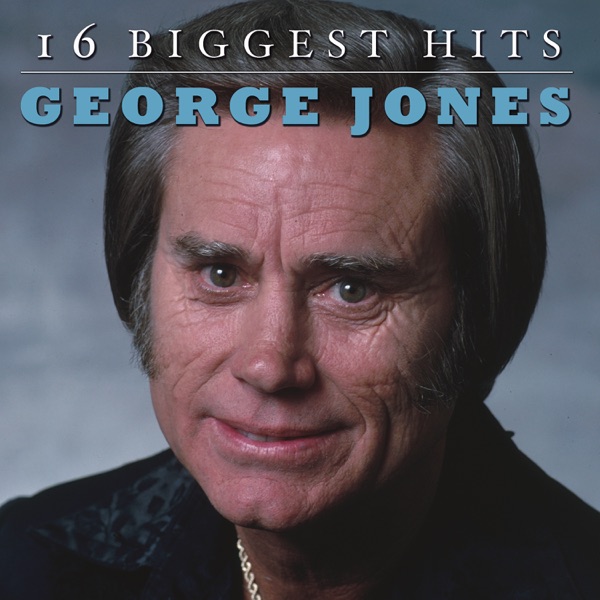
- 16 Biggest Hits: George Jones album referenceAlbum / artwork context
- George Jones artist profileArtist background
- He Stopped Loving Her Today on MusicBrainzRecording metadata
- George Jones on MusicBrainzArtist metadata