
Songwriting Takeaway
- Strong fit for corporate apologies, AI harms, platform decay, political scandals, celebrity downfall, failed products, institutional neglect, environmental aftermath, and any trend where the emotional center is "look what we became."
Chord Progression Visuals
Genre lane: Electronic / industrial rock. Chosen because the recent run was Country/Folk, Soul/R&B, then Hip-Hop; today moves into the electronic/industrial lane without repeating any logged song.
Key: Practical center: B minor. The harmony leans on minor gravity with major-chord color around it, giving the song a bleak but strangely open emotional field.
Chord Progression / Harmonic Design
- Core verse feel: Bm - D - A - G or a close i-III-VII-VI loop, depending on arrangement reduction.
- The loop is simple, nearly static, and circular. That matters: the narrator feels trapped in a room with the same thoughts returning.
- The progression avoids a bright functional resolution. The major chords are not "happy"; they feel like cold light entering a damaged space.
- The chorus expands through intensity and register more than through sophisticated harmonic movement. The emotional lift is not hope; it is exposure.
- Dissonant textures, noise swells, and brittle timbres act like extra harmony. The dirt around the chords is part of the meaning.
Time Signature: 4/4.
Tempo / Feel: Slow-to-mid tempo, roughly 80-85 BPM depending on how it is counted. The pulse feels deliberate, heavy, and almost ritualistic, with enough space for every word to land.
Structural Snapshot
- Sparse, fragile opening: close vocal, minimal pulse, and damaged ambience.
- Verse images establish bodily damage, numbness, and self-observation without giving a full biography.
- The chorus turns the private confession outward toward another person, making shame relational instead of merely internal.
- Later sections add distortion, noise, and density, so the arrangement enacts collapse rather than just describing it.
- The ending does not tidy the damage. It leaves the listener inside the residue.
Notable Techniques
- Industrial intimacy: The production is harsh, but the vocal is close and vulnerable. That contrast makes the confession feel more human, not less.
- Minimal vocabulary, maximum implication: The lyric uses a handful of plain images around pain, touch, dirt, control, and loss rather than a detailed backstory.
- Confession without autobiography dump: We understand a life has gone wrong, but the song withholds the full case file.
- Texture as psychology: Noise, distortion, and sonic decay perform the narrator's state of mind.
- Second-person turn: Addressing a "you" gives the song stakes. The damage is not abstract; someone else is being pushed away, warned, or mourned.
- Anti-glamour: The song refuses to make ruin romantic. It sounds stripped, ugly, and exposed.
- Controlled escalation: The arrangement grows more violent, but the core musical idea remains simple. That keeps the listener oriented while the emotional weather worsens.
Emotional Effectiveness
The song works because it lets shame speak plainly without explaining itself to death. The listener is not handed a complete narrative of addiction, depression, self-destruction, or regret. Instead, the song gives physical evidence: a body that feels wrong, a room that feels contaminated, a relationship that might be too late to save, and a self-image reduced to wreckage.
Its power also comes from the gap between smallness and scale. Musically, it starts like one person whispering inside a machine. By the end, the machine seems to tear open around that person. The emotion is not just sadness; it is the horror of recognizing yourself as both victim and cause.
Production / Arrangement Elements
- Close, dry vocal up front, almost uncomfortably intimate.
- Sparse low-end and steady pulse create a ritual march rather than a groove for dancing.
- Metallic noise, distortion, and damaged ambience frame the vocal like corrupted memory.
- Dynamic build is saved for emotional release, not constant excitement.
- Silence and negative space are crucial. The empty room around the vocal is as important as the loud sections.
Songwriting Tricks Applicable to Original Work
- If the topic is shame, keep the lyric small and concrete. Do not explain the whole moral universe.
- Let arrangement texture carry what the narrator cannot say directly: static for anxiety, distortion for self-disgust, brittle percussion for numbness, low drones for dread.
- Use a simple loop when the character is mentally stuck. Complexity can weaken the feeling of fixation.
- Turn from "I" to "you" when the song needs consequence. A confession becomes more powerful when someone else is in the blast radius.
- Avoid slogan hooks for intimate damage. The hook can be a plain self-assessment, a warning, or a broken promise.
- Let the final section sound like the inner world leaking into the outer world.
### Lyric Reverse-Engineering
1. What is the lyric really about underneath the surface?
Under the surface, it is about self-recognition after damage: the moment when numbness, addiction, regret, or self-loathing stops being background noise and becomes undeniable. The surface images are bodily and material, but the deeper subject is moral and relational collapse: "I have become someone I cannot trust with love."
2. Likely starting point
Likely emotion + phrase/image + sonic texture. The song probably began from a concentrated feeling of disgust, numbness, and remorse, paired with a stark self-image. The music then creates the room that feeling lives in: sparse, mechanical, decayed, and slowly overwhelming. It does not feel title-first in a commercial sense; it feels wound-first.
3. Framing type
Emotional-residue + confessional ruin inventory + contrast/double-reading. The lyric can be heard as addiction confession, depression testimony, spiritual emptiness, relationship warning, or post-fame self-indictment. It does not lock itself to one literal explanation, which is why different singers and audiences can inhabit it.
4. How does the song avoid over-explaining?
It withholds the incident report. There are no dates, diagnoses, therapy summaries, or named betrayals. The lyric gives enough sensory evidence to prove the condition, then lets the listener infer the history. The second-person address also prevents exposition: instead of telling us everything that happened, the singer speaks as if the most important person already knows.
5. What approach could apply to trending-news songs?
Use this when a news story is really about consequences after a system, leader, company, platform, or public figure recognizes the damage it caused. Do not write the explainer. Write the confession after the damage is visible: the empty office, the broken product promise, the apology draft, the customer on hold, the founder staring at the old mission statement. Make the hook a plain admission or warning, not a policy recap.
Reusable approach discovered: Confessional Ruin Inventory. Let a damaged narrator or institution list concrete evidence of collapse while withholding the full backstory; the listener fills in the indictment.
Application to Our Work
- Strong fit for corporate apologies, AI harms, platform decay, political scandals, celebrity downfall, failed products, institutional neglect, environmental aftermath, and any trend where the emotional center is "look what we became."
- Example: instead of "an AI company apologized after its chatbot caused harm and regulators opened investigations," write from the product's or founder's point of view in a dark electronic ballad: the glowing help screen, the cached promise, the support queue, the family email, the mission poster curling at the edge. The chorus admits damage without naming every legal detail.
- Musical direction: slow minor loop, close vocal, sparse electronic pulse, damaged textures, gradual distortion build, and a second-person turn toward the person or public that was harmed.
Practice Prompt
Pick one headline where the public statement feels too clean. Write the private confession underneath it. Use five concrete artifacts, one person addressed as "you," and no abstract nouns in the first verse. Let the production get dirtier each time the confession gets closer to the truth.
Reference Links
- Hurt on Apple MusicSong / recording search
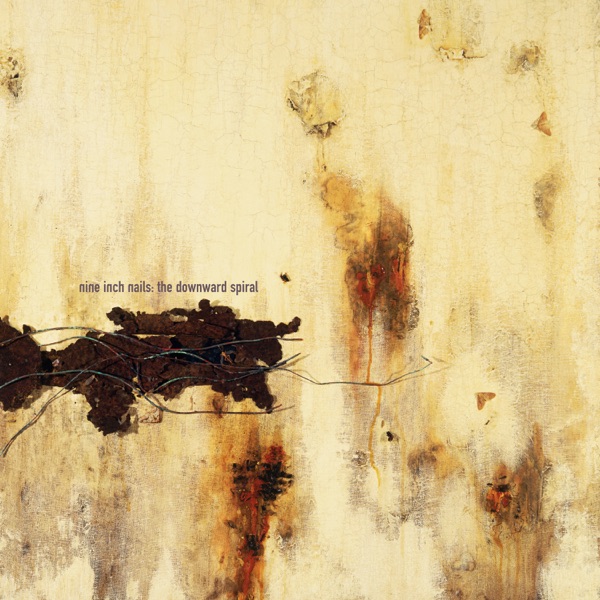
- The Downward Spiral album referenceAlbum / artwork context
- Nine Inch Nails artist profileArtist background
- Hurt on MusicBrainzRecording metadata
- Nine Inch Nails on MusicBrainzArtist metadata