
Songwriting Takeaway
Key: A minor. The track lives on a dark, modal-feeling Am center rather than a bright pop tonic. Time signature / tempo: 4/4, about 120 BPM — danceable, but stiff enough to feel like machinery or marching bodies. Main harmony: The song is much more riff/groove-centered than chord-centered. Practical shorthand: Am vamp with chorus/sectional movement touching F - Dm - C - Am. Functionally: i -> VI -> iv -> III -> i in A minor, with the tonic drone doing much of the emotional work.
Chord Progression Visuals
Genre lane: Electronic / industrial synth-pop. Chosen because the last three full lessons were Hip-Hop (Kendrick Lamar), Country/Folk (Patsy Cline / Willie Nelson), and Soul/R&B (Marvin Gaye). This keeps rotation broad and avoids rock/metal. Checked against the log: "People Are People" was not already used as a full lesson.
### Core musical facts
- Key: A minor. The track lives on a dark, modal-feeling Am center rather than a bright pop tonic.
- Time signature / tempo: 4/4, about 120 BPM — danceable, but stiff enough to feel like machinery or marching bodies.
- Main harmony: The song is much more riff/groove-centered than chord-centered. Practical shorthand: Am vamp with chorus/sectional movement touching F - Dm - C - Am. Functionally: i -> VI -> iv -> III -> i in A minor, with the tonic drone doing much of the emotional work.
- Form feel: Percussive intro / chant hook / short verses / repeated hook-answer sections. The structure behaves like a protest slogan processed through a factory rhythm section.
### Arrangement and production techniques
- Found-object percussion as argument: The metallic hits are not decoration; they make intolerance sound like a machine. The track turns social friction into literal clang, scrape, and impact.
- Minimal harmony, maximal texture: Because the chord vocabulary is small, attention shifts to timbre, rhythm, and vocal delivery. This is useful for news songs: if the topic is conceptually loaded, simplify the harmony and let texture carry the world.
- Call-and-response clarity: Lead vocal states the plain moral question; backing/response parts make it communal and slightly confrontational.
- Synthetic body language: The beat is danceable but squared-off. That gives the song tension: it invites movement while sounding emotionally restricted.
- Hook first, explanation second: The title phrase arrives as a complete thesis before the verses add any detail.
### Emotional effectiveness
- The genius is the collision between a nearly child-simple humanist statement and a harsh industrial backing track. The lyric says, essentially, "this should be obvious"; the production says, "but the world keeps making it violent."
- The song does not plead delicately. It sounds frustrated, blunt, and baffled. That emotional posture is why the simple language does not feel naive.
- The minor-key vamp keeps the moral question from becoming sunny idealism. It feels like a question asked after too many failed explanations.
### Songwriting tricks to steal
- Use a plain-language thesis as the hook. If the audience can understand the moral center in one sentence, the verses can stay sparse.
- Let sound design be the antagonist. The machines, clangs, and rigid groove play the role of the hostile system.
- Avoid naming every side. The lyric works because it never turns into a policy brief. It names the universal contradiction, then lets listeners fill in their own examples.
- Make repetition feel like insistence, not laziness. Repeat the obvious line because the world has not absorbed it yet.
- Contrast innocence with pressure. A simple phrase over an aggressive track can create more complexity than complex lyrics over neutral music.
### Lyric reverse-engineering
1. What is it really about underneath the surface?
- On the surface, it is about people failing to get along. Underneath, it is about the exhaustion of having to explain basic human equality to systems, tribes, and individuals that should already know better.
2. Likely starting point:
- Probably a title/phrase plus groove: a blunt moral phrase — "people are people" — placed against a hard, metallic electronic rhythm. The phrase is so simple that the arrangement had to supply the anger and friction.
3. Framing type:
- Literal moral riddle + contrast/double-reading. The words are almost elementary; the track around them is severe. That double-reading keeps the song from becoming a children's slogan.
4. How it avoids over-explaining:
- It never lists all forms of prejudice, never names a specific political event, and never argues case law. It asks the obvious question, repeats the contradiction, and lets the hostile sound-world imply the social machinery behind it.
5. Trending-news application:
- For divisive headlines, do not recap the whole fight. Find the smallest human sentence everyone should already agree with, then put it against a sound palette that embodies the conflict: courthouse stomp, notification chatter, factory clank, stadium chant, server hum, siren pulse. The hook should feel obvious; the production should reveal why the obvious truth is still hard.
### Practical original-work exercise
Write a 90-second demo using only one minor vamp and one short thesis-hook. Choose a current conflict story, but ban all proper nouns. Build the verses from three sounds/objects only: a room sound, a device sound, and a crowd/system sound. Let those sounds explain the headline instead of the lyric doing it.
### Sources checked
- Depeche Mode Live Wiki lists "People Are People" at 120 BPM, 4/4, key of A minor.
- Hooktheory and common chord charts support A minor as the tonal center and the Am / F / Dm / C vocabulary.
Reference Links
- People Are People on Apple MusicSong / recording search
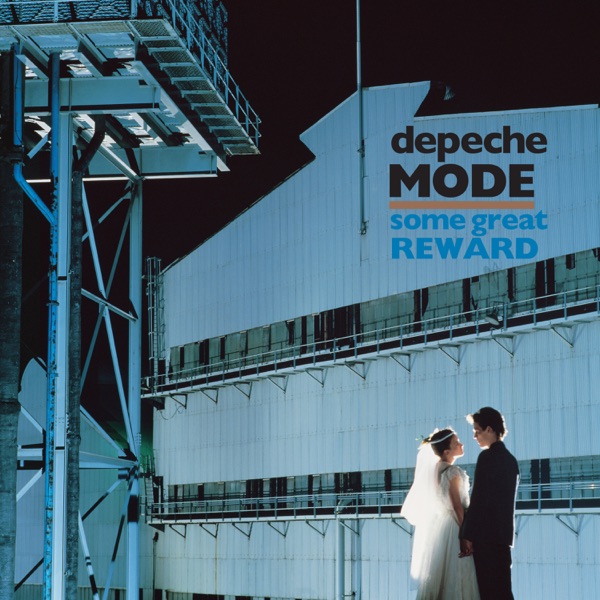
- Some Great Reward (Deluxe) album referenceAlbum / artwork context
- Depeche Mode artist profileArtist background
- People Are People on MusicBrainzRecording metadata
- Depeche Mode on MusicBrainzArtist metadata