
Songwriting Takeaway
This is a masterclass in making a song feel like pure momentum without writing a plot. The lyric is almost all sensation, invitation, and mantra; the arrangement supplies the actual story. For original work, especially trending-news songs, this is the reminder
Genre Rotation / Duplicate Gate: Rebuilt `memory/music-lessons-index.json` first. Candidate checks this turn:
- `"Don't Stop 'Til You Get Enough"` - OK, not already covered.
- `"Wanna Be Startin' Somethin'"` - rejected, already covered 2026-06-25.
- `"Superstition"` - rejected, already covered 2026-02-04.
- `"I Feel for You"` - OK as a fallback, but not selected.
Recent lessons were Otis Redding Soul/R&B, Willie Nelson Country/Folk bonus, and Depeche Mode Electronic / industrial synth-pop. Today moves into Pop / Funk / Disco-Soul and avoids any rock/metal streak.
Why This Song: This is a masterclass in making a song feel like pure momentum without writing a plot. The lyric is almost all sensation, invitation, and mantra; the arrangement supplies the actual story. For original work, especially trending-news songs, this is the reminder that a hook can be a physical command instead of an explanation.
Key: B Mixolydian / B dominant center. HookTheory frames it as B Mixolydian, while Chordify calls the practical key B major. The useful writing takeaway: B is home, but the flat-7 color (A natural) is not a passing accident. It is the groove's bloodstream.
Chord Progression
- Core vamp: B7 / B9-ish dominant color -> A / A7 -> B7.
- Roman-numeral view in B: I7 -> bVII(7) -> I7.
- Some charts show extra colors such as F#7 or other passing/turnaround sonorities, but the identity of the song is the dominant modal loop, not a functional pop progression.
- The trick is that the harmony does not travel far. It cycles. That makes the track feel less like a story moving from problem to resolution and more like a dance floor ritual that keeps generating energy.
Time Signature / Tempo: 4/4, roughly 117-120 BPM. GetSongBPM lists 117 BPM and 4/4; Chordify lists 120 BPM. For writing, feel it as brisk disco-funk: steady enough for the floor, loose enough for syncopated vocals, guitar, percussion, and horn stabs to breathe.
Notable Techniques
- Modal funk vamp: The B-to-A dominant loop gives the band a circular runway. The song wins by intensifying texture, not by changing chords every bar.
- Dominant-seventh color as home: B7 does not sound like it must resolve to E. It sounds like the party's center of gravity. That is a funk/blues move: tension becomes the room.
- Tritone vocal spark: The opening sung melodic cell emphasizes the major third against the flat seventh area, creating a bright-but-edgy jolt. It keeps the song from becoming harmless disco wallpaper.
- Falsetto as lead instrument: Jackson's high voice is not just pitch range; it is a texture. It cuts through strings, horns, percussion, and bass like a whistle over a moving machine.
- Vocal hiccups and ad-libs as percussion: The short attacks, gasps, and clipped exclamations behave like drum fills. They make the singer part of the groove instead of just a melody on top.
- Spoken intro as ignition: The opening spoken setup delays the full downbeat just long enough to make the first release feel launched.
- Strings and horns as kinetic glitter: Ben Wright-style strings and Jerry Hey-style horn punctuation do not carry the main tune; they create flashes, lifts, and pressure changes around the groove.
- Bass/guitar/percussion interlock: Louis Johnson's bass part, clipped guitar, hand percussion, and drum pocket turn a simple harmonic loop into an engine with many moving teeth.
- Sound-first lyric design: The words are chosen as much for mouthfeel, vowels, and rhythmic placement as for narrative information. That is why the hook survives even when listeners mishear half the line.
Emotional Effectiveness
- The song feels like permission. It arrives at the moment where desire, confidence, creative freedom, and dance-floor release all become the same motion.
- It does not ask the listener to understand a relationship. It asks the listener to enter a state.
- The ambiguity is the point. The central "force" can read as attraction, joy, sex, music, ambition, spiritual lift, or pure groove. That openness makes the track bigger than a literal seduction song.
- The repeated command works because the band never sounds bored. Every return has some new flicker: vocal, percussion, string, horn, bass, or mix energy.
- The adult breakthrough matters: this is Jackson stepping out of child-star framing into command of body, studio, groove, and persona. The lyric does not announce that transition; the sound proves it.
Songwriting Tricks Applicable to Original Work
- Start with a body-state, not a thesis: heat, lift, pulse, dizziness, light, hunger, pressure, motion.
- If the groove is strong, let the lyric be simple enough to ride it. Do not compete with the rhythm by over-writing.
- Use a modal vamp when the song is about staying in a feeling rather than solving a problem.
- Let one abstract noun do heavy lifting: force, fever, gravity, current, signal, pressure, spark.
- Build hooks from short imperatives: keep moving, hold on, don't look down, turn it up, stay with it, let it ride.
- Put tiny arrangement changes after repeated lines so repetition feels like acceleration, not laziness.
- Treat ad-libs as arrangement. For Suno prompts, specify vocal hiccups, breathy exclamations, call-and-response, or percussive falsetto accents if that is the desired energy.
- For disco/funk prompts: B Mixolydian, 118 BPM, 4/4, dominant-seventh vamp, live bass, tight rhythm guitar, hand percussion, bright strings, punchy horns, falsetto lead, euphoric but slightly edgy.
Lyric Reverse Engineering
1. What the lyric is really about underneath:
Under the surface invitation, it is about surrendering to a liberating force and refusing to interrupt the momentum once it starts. It is less a love story than a body-state: heat rising, power moving, music taking over, the self becoming confident enough to keep going.
2. Likely starting point:
Groove/melody first, then mantra/title. Sources describe Jackson getting the melody stuck in his head and humming it for days. That fits the finished lyric: the words feel reverse-fitted to rhythm, vowel, and breath. The title phrase then turns the groove into a command.
3. Framing mode:
Sound-first + emotional-residue + metaphorical/body-logic + contrast/double-reading. It can be read sensually, spiritually, musically, or creatively. The song does not lock the listener into one explanation; it gives a physical experience and lets meaning attach afterward.
4. How it avoids over-explaining:
It withholds plot, biography, conflict, and target. No one tells us exactly who is speaking to whom, what happened before the dance floor, or what "enough" literally means. The abstract language leaves space, while the groove supplies conviction. Because the band is so specific, the lyric can stay open.
5. Trending-news application:
Use this when the headline's real subject is momentum: a community reopening, a labor win after a long fight, a team on an impossible run, a scientific breakthrough, a viral dance/celebration, or a public mood shift where people feel released from pressure. Do not recap the article. Write the permission phrase people would chant once the pressure breaks. If the story has danger - gambling apps, AI hype, speculative bubbles - keep the groove seductive and let one shadow image show the cost.
Reusable Pattern Extracted: Body-First Permission Mantra
- Build from a groove and a short command rather than from a thesis.
- Keep verses sensory: lights, heat, hands, floor, pulse, screens, doors, engines, crowd noise.
- Let an ambiguous force word carry the big idea without explaining it.
- Best for positive momentum stories, comeback runs, breakthrough moments, community release, viral celebrations, or seductive hype stories where the listener needs to feel the pull before judging it.
Application to Our Work
- Community recovery: "Keep the Lights Moving" - after months of outages, the store sign blinks back on, kids cross the court again, the generator finally goes quiet, and the chorus gives the block permission to dance.
- Labor win: "Badge Turned Green" - a funky workplace groove built from scanner beeps, cold coffee, and the first shift back after a contract victory.
- Sports run: "Don't Look Down Yet" - team/fanbase momentum song, B Mixolydian funk vamp, crowd shouts, hook as a command to stay in the impossible ride.
- AI hype caution: "Keep On With the Glow" - seductive launch-demo disco-funk where the screen feels amazing, but verses show disabled badges and tired moderators in the reflection.
- Practical lyric rule: when the first draft sounds like an article summary, ask, "What would the crowd yell when the thing finally starts moving?" Then build the chorus around that.
Source Checks
- Official Michael Jackson site lists Off the Wall as an August 1979 album and includes the song on the track list: https://www.michaeljackson.com/albums/off-the-wall/
- HookTheory analyzes the song in B Mixolydian and notes extended-chord / non-standard-mode concepts: https://www.hooktheory.com/theorytab/view/michael-jackson/dont-stop-til-you-get-enough
- Chordify lists the practical chord vocabulary around B, B7, A/A7, key B, and 120 BPM: https://chordify.net/chords/michael-jackson-songs/don-t-stop-til-you-get-enough-chords
- GetSongBPM cross-checks 117 BPM and 4/4: https://getsongbpm.com/song/don-t-stop-til-you-get-enough/p82gw2
- Smooth Radio summarizes the origin story: Jackson wrote it for Off the Wall, the melody stuck with him, the meaning was intentionally open, and the track introduced key falsetto/vocal-hiccup traits: https://www.smoothradio.com/features/dont-stop-til-you-get-enough-meaning-facts-lyrics/
- Ethan Hein's theory breakdown is useful for the modal-vamp/tritone/groove-first reading: https://www.ethanhein.com/wp/2010/dont-stop-til-you-get-enough/
Reference Links
- Don't Stop 'Til You Get Enough on Apple MusicSong / recording search
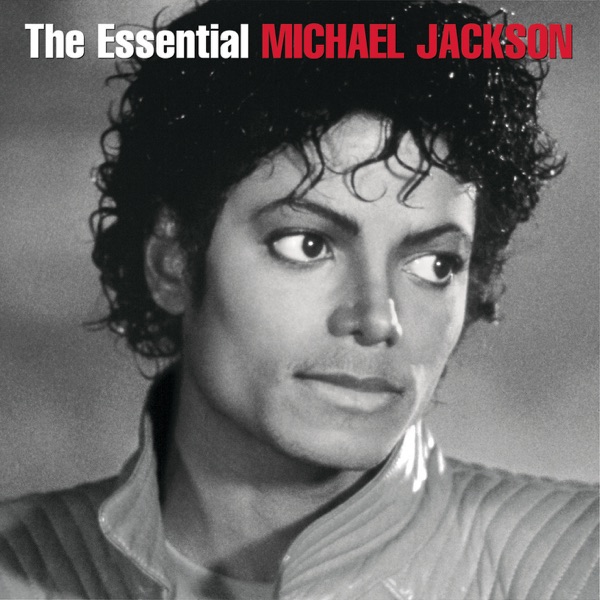
- The Essential Michael Jackson album referenceAlbum / artwork context
- Michael Jackson artist profileArtist background
- Don't Stop 'Til You Get Enough on MusicBrainzRecording metadata
- Michael Jackson on MusicBrainzArtist metadata