
Songwriting Takeaway
- The tritone interval as hook -- maximum dissonance = maximum recognition
Mode
Heavy Weather
Texture
amp pressure
Application
E Dorian / E blues (modal ambiguity -- the "Hendrix key")
Genre: Psychedelic Rock
Key: E Dorian / E blues (modal ambiguity -- the "Hendrix key")
Chord Progression: E7#9 -> G -> A (verse) -- the I7#9 -> bIII -> IV movement. The tritone (Bb against E) opens the song -- the "devil's interval" as ANNOUNCEMENT
Time Signature: 4/4 at ~108 BPM with heavy shuffle feel
Notable Techniques
- THE "HENDRIX CHORD" -- E7#9 -- contains BOTH the major 3rd (G#) AND the minor 3rd (G natural, respelled as #9). Major AND minor simultaneously. This harmonic CONTRADICTION is the entire song's identity. Neither happy nor sad -- BOTH
- Opening tritone interval (Bb against E) -- the most dissonant interval in Western music used as a HOOK. Two notes, instant recognition. Diabolus in musica (devil in music) as welcome mat
- Right-hand thumb plays bass notes while fingers play chords -- Hendrix played a right-handed Strat flipped upside-down left-handed. The reversed string order gave him UNIQUE voicings no right-handed player could replicate
- Wah pedal, Octavia fuzz, and Uni-Vibe combined -- the guitar tone IS the production. No synths, no keyboards -- guitar creates an entire WORLD of sound
- Feedback as musical element -- Hendrix CONTROLLED feedback, using it as sustain, texture, and climax. Not accident, INSTRUMENT
- The solo is VOCAL -- Hendrix's guitar phrases SPEAK. Bends that mimic inflection, vibrato that mimics trembling voice. The guitar IS his voice, the singing is secondary
Emotional Effectiveness
- "Purple haze all in my brain" -- psychedelic confusion expressed as GROOVE. You're disoriented but DANCING
- The E7#9 chord embodies the lyric -- it's confused, it's BOTH things at once. The harmony IS the haze
- "'Scuse me while I kiss the sky" (famously misheard as "kiss this guy") -- the mondegreen became part of the legend. Ambiguity EVERYWHERE
- Sexual, spiritual, drug-related -- interpretation is OPEN. Hendrix never clarified. The mystery IS the point
- 2:52 runtime -- CONCISE. No jamming, no extended exploration. Hits and LEAVES (see also: Immigrant Song brevity)
- The distortion doesn't feel aggressive -- it feels PSYCHEDELIC. Warm fuzz, not cold metal. Inviting chaos
Production Elements
- Recorded at De Lane Lea Studios, London (February 1967) with Chas Chandler producing
- Chandler: former Animals bassist, knew how to capture RAW energy without overproduction
- 4-track recording -- massive limitations. Guitar, bass, drums on one track, vocals on another. Committed decisions
- The Octavia pedal (Roger Mayer custom) -- doubles the signal an octave UP. Creates that otherworldly, ring-modulator-like tone in the solo
- Marshall amps CRANKED -- the tubes saturating is the distortion source. Volume = tone
- Mitch Mitchell's jazz drumming -- NOT a rock drummer. Rolls, fills, syncopation from JAZZ tradition applied to rock. Creates unpredictable, organic feel
- Noel Redding's bass follows guitar riff in verses -- UNITY, then diverges in transitions for movement
- Mix is relatively DRY by psychedelic standards -- no excessive reverb or delay wash. Punchy, immediate
Songwriting Tricks
- THE TRITONE AS HOOK -- two notes, maximum dissonance, instant recognition. Bb to E. The most "wrong" interval becomes the most RIGHT opening in rock history
- Major/minor ambiguity (7#9 chord) creates emotional complexity in ONE chord -- don't choose between happy and sad, play BOTH
- Short runtime for psychedelic content -- the CONSTRAINT of brevity keeps it focused. Extended jamming would dilute the haze (studio discipline vs. live exploration)
- Onomatopoeia in vocal delivery -- "purple haze" SOUNDS like what it describes. The vowels are open, dreamy, unfocused
- Guitar tone carries 70% of the emotional information -- the SOUND of the guitar IS the composition, not just the notes
- Open with your most distinctive moment -- tritone + E7#9 in first 3 seconds. Instant identity
The "Hendrix Chord" Lesson (E7#9)
- Notes: E, G#, B, D, G(?) -- the G# (major 3rd) and G natural (#9/b3) COEXIST
- Voicing on guitar: 0-7-6-7-8-0 (Hendrix's voicing) -- thick, dissonant, unmistakable
- Creates TENSION that never resolves -- neither major nor minor, perpetually ambiguous
- Used in: jazz (called the "dominant #9" or "altered dominant"), funk, R&B
- James Brown used it. Prince used it. D'Angelo used it. It's the BRIDGE chord between blues, rock, funk, and jazz
- LESSON: When you want emotional complexity in ONE chord, use a dominant 7#9. It says "I'm conflicted" harmonically
The Reverse-Strung Guitar
- Hendrix played right-handed Strats flipped left-handed
- Low E string closest to the FLOOR (opposite of normal left-handed setup)
- This meant: bass strings had SHORTER scale length, treble strings had LONGER
- Result: slightly different tension, different resonance, UNIQUE overtone profile
- The tremolo bar angle was reversed -- affected vibrato character
- Pickup proximity was different -- the slant affected tone balance
- LESSON: Equipment "limitations" or "wrong" setups can create signature sounds. Iommi's finger injury, Hendrix's reversed guitar -- the "problem" IS the identity
The Psychedelic Production Revolution
- Before Hendrix: guitar was an accompaniment instrument in pop/rock
- After: guitar WAS the production -- effects, feedback, tone manipulation = entire sonic universe
- The Octavia, fuzz face, wah, Uni-Vibe -- effects as COMPOSITION tools, not decorations
- Hendrix made the RECORDING STUDIO an instrument (alongside Beatles, Brian Wilson)
- 4-track limitations forced COMMITMENT -- you couldn't undo, couldn't fix. Play it RIGHT
- LESSON: Effects and processing ARE composition. Don't add them after -- build WITH them
Why Hendrix Changed Everything (February 1967)
- Guitar technique: made the electric guitar a COMPLETE instrument (rhythm + lead + bass + percussion simultaneously)
- Sound design: proved guitar TONE is as important as the notes played
- Cultural bridge: Black American playing blues-rooted music for British rock audiences, then bringing THAT energy back to America
- 4 years of recording (1966-1970) changed music permanently. Died at 27
- Every guitarist after exists in his shadow: Stevie Ray Vaughan, Prince, Eddie Van Halen, Tom Morello, John Mayer -- all acknowledge the debt
- LESSON: Innovation often comes from combining traditions no one thought to combine. Blues + British rock + jazz drumming + studio experimentation = entirely new vocabulary
Application to Our Work
- The tritone interval as hook -- maximum dissonance = maximum recognition
- Dominant 7#9 for emotional ambiguity -- one chord captures conflicted feelings
- Guitar tone/effects as composition -- SOUND design matters as much as notes
- Short psychedelic songs work -- don't assume trippiness requires length
- Equipment "problems" create identity -- embrace the weird
- Open with your most distinctive moment -- instant recognition in 3 seconds
- Major/minor coexistence for complex emotions -- don't choose, use BOTH
- Feedback as instrument -- controlled chaos is still controlled
- Jazz drumming in non-jazz context = fresh rhythmic energy
Contrast With Other Lessons
- Shares tritone usage with "Black Sabbath" and "Iron Man" -- devil's interval as signature
- Shares brevity-as-power with "Immigrant Song" (2:26) -- psychedelic precision
- Shares one-man-as-universe with Prince ("When Doves Cry") and Stevie ("Superstition") -- guitar/voice IS the production
- Shares blues foundation with "The Thrill Is Gone" (B.B. King) -- Hendrix took B.B.'s vocabulary and set it on FIRE
- Shares effects-as-composition with Kraftwerk ("Trans-Europe Express") and Depeche Mode ("Enjoy the Silence") -- different instruments, same principle
- Shares reversed/broken equipment innovation with Iommi's finger injury (Black Sabbath) -- limitation as identity
- Shares cultural bridge-building with "Walk This Way" (Run DMC/Aerosmith) -- genres fused through authenticity
- Shares jazz drumming in rock with "Bohemian Rhapsody" (Roger Taylor's fills) -- polyrhythmic sophistication
- THE foundational psychedelic rock document -- everything from Pink Floyd to Radiohead to Tame Impala traces back here
- Guitar hero vocabulary that subsequent lessons (Cowboys From Hell, Tornado of Souls) explicitly BUILD on
Reference Links
- Purple Haze on Apple MusicSong / recording search
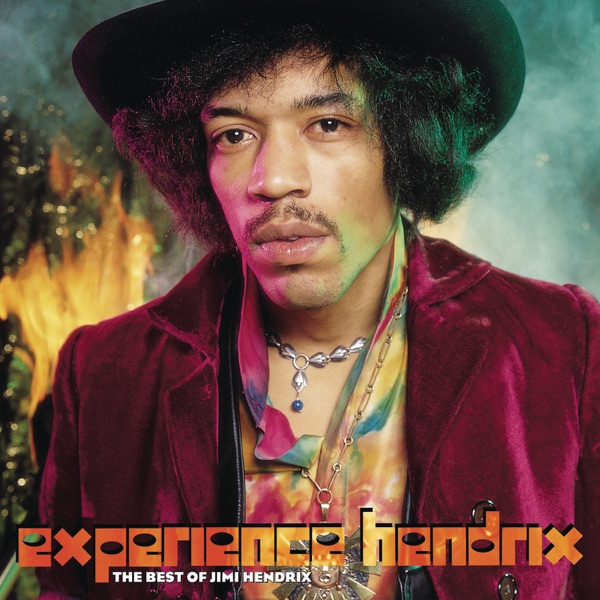
- Experience Hendrix: The Best of Jimi Hendrix album referenceAlbum / artwork context
- Jimi Hendrix artist profileArtist background
- Purple Haze on MusicBrainzRecording metadata
- Jimi Hendrix on MusicBrainzArtist metadata