
Songwriting Takeaway
- Strong fit for Galaxy Transmissions songs about leaked layoffs, AI policy reversals, sports trades, political scandals, platform rule changes, celebrity breakups, court leaks, institutional coverups, and disaster-response failures.
Genre lane: Soul / R&B / Motown psychedelic soul
Why today: The rotation has been deliberately staying outside rock/metal. After electronic minimalism yesterday, today moves into soul/R&B and studies how suspicion, rumor, and emotional restraint can become more powerful than a direct breakup confession.
Core Stats
- Artist: Marvin Gaye
- Writers: Norman Whitfield and Barrett Strong.
- Released: Marvin Gaye's version was recorded before the Gladys Knight hit version but released later, becoming a defining Motown single in 1968.
- Key / Tonal Center: Commonly heard in E-flat minor territory. The track lives in a dark minor center rather than the brighter major-soul world many listeners expect from Motown.
- Time Signature: 4/4.
- Tempo / Feel: Mid-tempo, tense, and stalking. It is danceable, but the movement feels like pacing the floor while trying not to break down.
- Core Progression / Harmony: Built around a minor-key vamp more than a long harmonic journey. The groove circles around Ebm with dark movement through nearby minor/soul colors, often implying a tense i-centered world with call-and-response chord stabs. The important trick is not chord complexity; it is harmonic suspicion. The song keeps returning to the same emotional room.
Structural Snapshot
- Instrumental intro establishes the nervous pulse before Marvin enters.
- Verse begins in controlled confrontation: the singer knows something but is not fully in command of it.
- Chorus/title phrase turns rumor into the hook.
- Verses keep adding emotional evidence rather than narrating a full timeline.
- The performance intensifies through vocal grain, background responses, and arrangement pressure, not through a huge harmonic release.
- The song ends still trapped in the rumor-field; there is no comforting resolution.
Notable Techniques
- Rumor as hook: The title is not just information. It is the emotional delivery mechanism. The singer did not receive truth face-to-face; he received it through the social bloodstream.
- Minor Motown tension: The groove has soul polish, but the tonal color is shadowed. That contrast makes the song feel elegant and wounded at once.
- Controlled vocal pain: Marvin does not simply shout betrayal. He compresses it. The restraint makes the hurt feel adult, proud, and dangerous.
- Call-and-response suspicion: Background vocals and instrumental figures behave like voices around the narrator: whispers, confirmations, echoes, and social pressure.
- No courtroom detail: The lyric never overbuilds the evidence chain. It stays with what the rumor did to the narrator.
- Vamp as fixation: The repeated groove mirrors the mental loop of suspicion: once you hear the thing, you keep hearing it.
- Melodic ache against rhythmic discipline: The band stays locked while the lead vocal bends, pleads, and frays. That friction is the song's emotional electricity.
Emotional Effectiveness
- The song works because betrayal is framed as secondhand knowledge. That is more humiliating than a normal breakup: the community knew before the singer was told.
- The central wound is not only romantic loss; it is loss of dignity, privacy, and trust.
- The groove feels like a private panic being forced to keep a public suit on.
- The repeated title becomes obsessive. Each return reopens the same question: who knew, when, and why did nobody tell me directly?
- The song does not need a detailed backstory because the situation is universally legible: hearing life-changing news from the wrong mouth.
Production / Arrangement Elements
- Electric piano/guitar-like riffing and tight rhythm section create a taut, smoky Motown pocket.
- Bass movement is grounded and suspicious rather than bouncy.
- Percussion and backbeat keep the track moving forward while the harmony emotionally circles.
- Background vocals add communal presence; they feel less like cheerleaders and more like the rumor network made musical.
- Strings/horns/arrangement accents add drama without turning the song into theater. The groove remains the spine.
- The mix leaves Marvin exposed enough that his vocal becomes both witness and wound.
Songwriting Tricks
- Make the delivery method the drama: The news itself matters, but how the singer received it matters more. The wrong channel can be the whole wound.
- Use a social object as the hook: Grapevine, rumor mill, group chat, leaked memo, push alert, forwarded screenshot, hallway whisper. The medium can become the chorus.
- Keep the accusation incomplete: Suspense is stronger when the lyric does not litigate every fact. Let the listener feel the missing conversation.
- Let pride fight grief: The best betrayal songs are rarely pure sadness. Add humiliation, anger, disbelief, and self-control.
- Repeat like a mind looping: If the song is about suspicion, the structure should circle. Do not give it too many escape doors.
- Use backing vocals as society: They can represent witnesses, gossip, public opinion, family, coworkers, fans, or the algorithmic crowd.
Lyric Reverse Engineering
1. What it is really about underneath the surface: On the surface, it is about learning a lover may be leaving or betraying the narrator. Underneath, it is about humiliation through indirect knowledge. The deepest wound is not only "you hurt me"; it is "I had to learn my own life from other people." That makes the song about social exposure, dignity, and the terror of being the last person to know.
2. Likely starting point: phrase/title + emotional contradiction. The title phrase is such a strong idiom that it likely served as the conceptual engine: a familiar expression for rumor becomes a personal disaster. The contradiction is that the singer has received information, but not intimacy; knowledge arrives without care.
3. Framing mode: emotional-residue + social-metaphor + contrast/double-reading. The lyric is literal enough to be a breakup song, but the grapevine is a broader metaphor for networks, whispers, and public knowledge. It also has a double reading: the groove is cool and controlled while the situation is emotionally destabilizing.
4. How it avoids over-explaining: It does not name every character, reproduce the conversation, prove the rumor, or explain the relationship history. It focuses on the residue: shock, disbelief, pride, and the sick feeling of hearing the truth through the wrong channel. The title carries the mechanism, so the verses can stay emotionally immediate.
5. Trending-news application: For modern news songs, this is gold. Many public stories now arrive through leaks, screenshots, alerts, anonymous sources, group chats, dashboards, and algorithmic feeds. Instead of explaining the whole event, write from the person who finds out through the wrong channel: an employee sees layoffs in a leaked memo, a fan learns a trade from a notification, a family hears about a disaster response failure from a livestream, a creator sees policy changes through a screenshot before the platform tells them.
The Wrong-Channel Revelation Approach
- Pick a story where the emotional injury is intensified by how the information arrived.
- Make the hook the delivery channel: grapevine, screenshot, push alert, memo, leak, feed, group chat, ticker, hotline, automated email.
- Keep the verses inside the moment of receiving the news. Do not recap the full article.
- Let the singer fight between disbelief, pride, anger, and embarrassment.
- Use a circular groove to mimic the mind replaying the message.
- Use backing vocals or repeated ad-libs as the crowd/network that knew first.
Application to Our Work
- Strong fit for Galaxy Transmissions songs about leaked layoffs, AI policy reversals, sports trades, political scandals, platform rule changes, celebrity breakups, court leaks, institutional coverups, and disaster-response failures.
- Example: instead of "Company employees learned about layoffs from press reports before management confirmed it," write a minor soul/R&B track called "Saw It in the Feed." Verse images: the badge still works, coffee cooling, Slack frozen, a headline using your job title, coworkers typing then deleting. Hook centers on the humiliation of learning your future from the feed.
- Production direction: minor-key soul vamp, tight drums, low bass, smoky keys, tense backing-vocal responses, restrained lead vocal that cracks only at key moments. Keep it classy and wounded, not melodramatic.
Reference Links
- I Heard It Through the Grapevine on Apple MusicSong / recording search
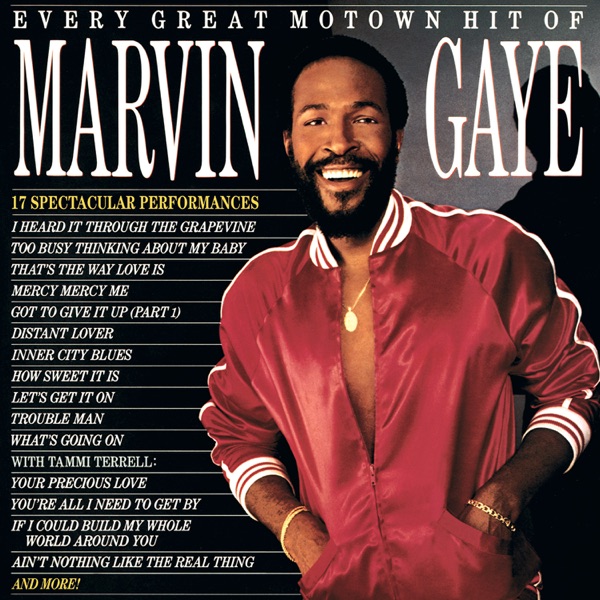
- Every Great Motown Hit of Marvin Gaye album referenceAlbum / artwork context
- Marvin Gaye artist profileArtist background
- I Heard It Through the Grapevine on MusicBrainzRecording metadata
- Marvin Gaye on MusicBrainzArtist metadata