
Songwriting Takeaway
Minor vamp as survival posture: The D minor center barely moves. That makes the narrator feel like he is standing in one hard-lit place while danger circles around him. Jazz-blues sophistication inside soul phrasing: The harmony is simple on paper, but the color comes from extensions, horns, suspended tension, and Marvin's elastic vocal phrasing. Saxophone as second voice: The horn lines do not merely decorate; they answer the singer like a streetwise witness. It gives the track film-noir dialogue without adding words.
Chord Progression Visuals
Genre lane: Soul/R&B / cinematic soul-funk / jazz-blues soundtrack. Chosen because the last three lessons were Country/Folk ("Jolene"), Hip-Hop ("Ms. Jackson"), and Pop/Funk ("Another One Bites the Dust"). The recent run is not stuck in rock/metal, and today keeps the rotation in the Soul/R&B lane with Marvin Gaye without repeating the already-logged "What's Going On," "Mercy Mercy Me," or "Inner City Blues."
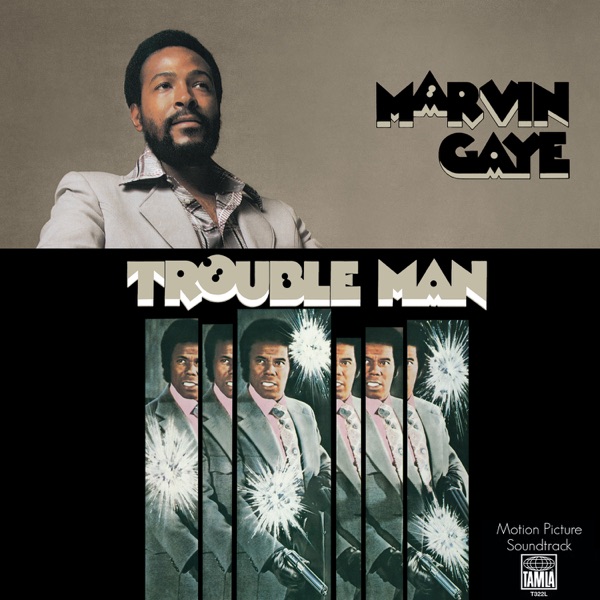
Writer / artist: Marvin Gaye
Film / year: Trouble Man, 1972. Released as a single on Tamla in November 1972.
Working key: D minor for practical playing/transcription. Some automatic metadata tools tag A minor, but chord analysis and playable sheets center the vocal tune around Dm.
Chord progression: Mainly a D minor vamp, with movement to G minor / G color and A / A7 dominant pressure depending on section/transcription. A simple working map: Dm vamp -> G section -> Dm -> A7 -> Dm. The song is less about functional chord travel and more about attitude over a smoky minor floor.
Time signature: 4/4.
Tempo: About 107-109 BPM.
### Notable Techniques
- Minor vamp as survival posture: The D minor center barely moves. That makes the narrator feel like he is standing in one hard-lit place while danger circles around him.
- Jazz-blues sophistication inside soul phrasing: The harmony is simple on paper, but the color comes from extensions, horns, suspended tension, and Marvin's elastic vocal phrasing.
- Saxophone as second voice: The horn lines do not merely decorate; they answer the singer like a streetwise witness. It gives the track film-noir dialogue without adding words.
- Cool vocal over dangerous harmony: Marvin does not belt the whole song. He sounds controlled, almost conversational, which makes the danger feel mastered rather than merely feared.
- Self-mythologizing refrain: The title turns the narrator into a role, almost like a movie poster. He is not just a guy with problems; he is the one who has learned how to move through trouble.
- Hard consonants plus soft tone: The words carry grit, but the delivery stays smooth. That contrast is the emotional engine: pain processed into style.
- No over-arranged chorus explosion: The track does not need a giant pop lift. The hook is identity, not release. The groove keeps circling because trouble keeps returning.
- Soundtrack DNA: Because it comes from a film score, the song feels like a character theme. It tells you who the protagonist is before it tells you everything that happened.
### Emotional Effectiveness
"Trouble Man" works because it makes resilience sound cool without making hardship sound easy. The narrator has clearly been through pressure, but the song does not perform fragility. It performs composure after damage.
The emotional charge comes from these tensions:
- vulnerability hidden under swagger
- danger implied but not itemized
- blues pain delivered with soul elegance
- a minor-key setting that still moves with confidence
- a personal survival story framed like a public legend
- fatalism about trouble, but refusal to be controlled by it
The song's real feeling is not "nothing can hurt me." It is closer to: "I know the hurt is coming, and I know how to keep walking." That is a very usable emotional target for original songs about workers, creators, gamblers, patients, athletes, or communities under pressure.
### Songwriting Tricks Applicable to Original Work
- Give the narrator a role-name. "Trouble Man" is stronger than "I Have Problems." A role-name gives the singer mythic identity without needing exposition.
- Use one minor vamp when the point is endurance. If the character is trapped in a repeating system, do not over-modulate. Let the harmony circle.
- Make the hook a self-definition. A chorus can say "this is who I am under pressure" instead of "this is what happened."
- Let instruments carry backstory. Sax, guitar, synth, or strings can imply city, night, grief, history, or danger without the lyric recapping it.
- Write from controlled heat. Not every painful song needs collapse. Sometimes the most powerful narrator is the one speaking calmly because panic would waste oxygen.
- Use recurring life-certainties. The lyric leans on the idea that some forces are unavoidable. For original work, that can become rent, clocks, cameras, layoffs, algorithms, storms, bad beats, or deadlines.
- Avoid full biography. Give the scar pattern, not the medical chart.
- For Suno prompts: "cinematic soul-funk, Marvin Gaye-inspired noir mood, D minor vamp, 4/4, 108 BPM, smoky saxophone replies, brushed/laid-back drums, warm electric bass, wah guitar color, controlled male soul vocal, survival character theme, cool under pressure, sparse but sophisticated arrangement."
### Lyric Reverse Engineering
1. What is the lyric really about underneath the surface?
On the surface, it is a confident character song for the film's protagonist. Underneath, it is about surviving inside a world where trouble is not an exception; it is part of the operating system. The narrator is not asking to be rescued. He is claiming competence, protection, and identity after repeated pressure.
2. What was likely the starting point?
Likely character + title + film mood, with groove and horn color close behind. The song needed to function as a theme: in a few minutes, it had to say, "this is the man, this is his weather, this is how he moves." The title probably came from the film/character frame, while the D minor vamp supplied the street-level tension.
3. Framing type
Character-study + mythic + emotional-residue + sound-first. It is not reportage and not a detailed life story. It is a role portrait: a person condensed into stance, weather, reputation, and groove.
4. How does the song avoid over-explaining?
It does not list every injustice, enemy, or backstory wound. It gives repeated hints of hardship, a few broad life-certainties, and the narrator's emotional posture. The arrangement fills in the rest: minor vamp for danger, sax for city/noir atmosphere, smooth phrasing for composure. The listener infers the biography from the way the singer carries himself.
5. What approach could apply to trending-news songs?
For news songs, avoid turning every stressed person into a victim monologue. Sometimes the stronger frame is a survivor title card: give the worker, nurse, whistleblower, creator, fan, driver, or candidate a role-name and let them sing from controlled heat. The lyric can show pressure through a few concrete objects while the hook defines who they become under pressure.
### Reusable Approach Discovered: Noir Survivor Title Card
Turn a headline about pressure into a character theme rather than a recap. Name the narrator by the trouble they have learned to move through: "Overtime Man," "Badge Won't Bend," "Night Shift Saint," "Server Room Ghost," "Last Chair Standing." Use a minor vamp or steady loop, keep the vocal controlled, and let one instrument act like the second witness.
### Practical Galaxy Transmissions Application
Instead of writing "workers are anxious after another AI restructuring," write a cinematic soul-funk track called "Overtime Man."
- Narrator: a worker who has survived three reorganizations and knows where the old badge reader sticks.
- Verse details: cold coffee by the keyboard, a child asleep before the commute ends, all-hands invite blinking, severance rumors in the stairwell.
- Hook: not a complaint, but a self-definition: the person who keeps moving when trouble clocks in.
- Arrangement: D minor vamp, smoky sax answers, tight bass, drums slightly behind the beat, vocal calm but tired around the edges.
### Practice Prompt
Pick a current headline where someone is under systemic pressure. Do not write the article. Create:
1. A role-name title.
2. One minor-key loop that feels like endurance.
3. Three objects that prove the pressure.
4. One line of controlled self-definition.
5. One answering instrument that acts like the witness.
### Main Takeaway
"Trouble Man" proves that a topical or character song can be powerful without explaining the case. If the groove creates danger, the title creates identity, and the vocal carries composure, the listener will imagine the missing backstory. For original news-inspired songs: sometimes the headline does not need a narrator who breaks down. It needs a narrator who has learned how to walk through fire without wasting words.
### References Checked
- Classic Motown: release date, soundtrack context, film-score background, and Marvin's jazz-direction note: https://classic.motown.com/story/marvin-gaye-trouble-man/
- Chordify: D minor key, Dm/Gm/Dm/Am chord summary, 107 BPM: https://chordify.net/chords/marvin-gaye-songs/trouble-man-2-chords
- Virtual Songbook: 109 BPM estimate and multiple-key note with Dm chord analysis: https://www.virtual-songbook.com/song/trouble-man-marvin-gaye-9olsd
Reference Links
- Trouble Man on Apple MusicSong / recording search
- Trouble Man (Motion Picture Soundtrack) album referenceAlbum / artwork context
- Marvin Gaye artist profileArtist background
- Trouble Man on MusicBrainzRecording metadata
- Marvin Gaye on MusicBrainzArtist metadata