
Songwriting Takeaway
- Excellent for disaster recovery, layoffs, migration/immigration, climate stories, bankruptcies, sports-franchise departures, hospital waits, and any story where the real wound is what remains after the public action.
Genre: Soul/R&B / Southern soul
Why today: The last three logged lessons were country/folk (Dolly Parton), pop/funk (Michael Jackson), and hip-hop (OutKast), so the rotation is already clear of a rock/metal streak. Soul/R&B is the right move today because this song teaches a different skill than power, riff, or punchline: how to make stillness dramatic.
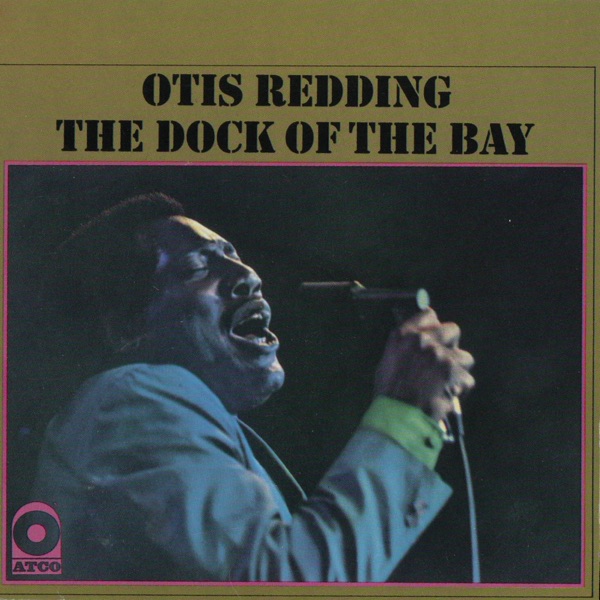
Sources / factual notes: Written by Otis Redding and Steve Cropper. Redding recorded it shortly before his death in December 1967; it was released posthumously in 1968. Common music references place it in G major, 4/4, around 100-104 BPM, with Steve Cropper's restrained guitar part, Booker T. & the M.G.'s/Stax feel, and the famous whistled outro helping define the record's suspended mood.
Key: G major, but emotionally it does not feel brightly major. The non-diatonic chords and Redding's weary delivery pull the song into a blue, unresolved color.
Chord Progression / Harmonic Design
- Verse core: G - B - C - A, often understood as I - III - IV - II in G. The B major and A major are outside plain G major, which gives the verse a drifting, restless quality. It sounds simple, but the harmony keeps stepping sideways.
- Chorus/refrain area: The title phrase returns to G, but the movement through E and A colors keeps the song from feeling settled. The harmony circles the dock rather than arriving home.
- Bridge/middle lift: The song opens the emotional frame briefly, suggesting distance, movement, and the failed promise of escape, then returns to the same seated image. That return is the point: the world has moved, but the narrator has not.
Time Signature: 4/4.
Tempo / Feel: Around 100-104 BPM. It is not a funeral pace; it has enough forward motion to feel like time passing. But the groove is relaxed and unhurried, so the narrator feels stationary while the beat quietly keeps living.
Structural Snapshot
- Verse establishes the narrator as displaced: away from home, away from purpose, watching the world move.
- Refrain/title image gives the whole song one fixed camera position.
- Second verse deepens the lack of direction rather than adding plot complexity.
- Bridge suggests travel and change, but not resolution.
- Whistled outro removes language entirely, leaving the listener with mood after explanation has run out.
Notable Techniques
- Stationary image as chorus engine: The song does not chase plot. It plants the singer in one place and lets that place absorb the entire emotional state.
- Major-key melancholy: The chords are not conventionally tragic. The sadness comes from color, tempo, vocal grain, and lyrical emptiness rather than minor-key obviousness.
- Non-diatonic passing gravity: B major and A major create a subtle wrongness inside an otherwise accessible soul progression. The listener feels displacement without needing to identify the chords.
- Under-sung vocal power: Redding does not oversell. The restraint makes the fatigue more believable. He sounds past the point of dramatic pleading.
- Refrain as posture: The hook is less a slogan than a body position: sitting, watching, waiting, not knowing what to do next.
- Minimal arrangement confidence: Guitar, bass, drums, and vocal leave room for air. The production trusts negative space.
- Whistled outro: The song ends by stepping beyond words. That is a huge lesson: sometimes the strongest final section is not a bigger lyric, but a human sound that admits language has stopped working.
- Everyday diction: No ornate poetry. Plain words plus one perfect scene.
Emotional Effectiveness
This song is devastating because almost nothing happens. A less mature writer would add a breakup scene, a job loss, a detailed backstory, or a big moral. Redding and Cropper instead give us the aftermath: a person sitting at the edge of the country, watching motion he cannot join.
The water matters because it moves without him. Ships, tides, sun, distance: everything implies passage, commerce, escape, and time. The narrator's stillness becomes more painful because the environment keeps changing. That contrast is the emotional engine.
The song also refuses self-pity theatrics. It is not yelling "I am lost." It shows lostness as routine. That makes it more adult and more useful for songwriting: the listener recognizes the emotion because the song gives them a place to stand inside it.
Production / Arrangement Elements
- Clean Southern soul rhythm section with relaxed pocket.
- Guitar part is supportive and conversational, not flashy.
- Bass moves warmly but never crowds the vocal.
- Drums emphasize steadiness, not drama.
- Background space lets the bay image feel wide.
- Whistling functions as a wordless coda: memorable, vulnerable, and slightly lonely.
Songwriting Tricks
- If the emotion is exhaustion, do not write an exhausted essay. Write one exhausted posture.
- Put the singer in a location that contradicts them: moving water around a stuck person, bright party around a grieving person, busy airport around someone who cannot leave.
- Use a title that is also a stage direction. The listener should instantly know where the camera is.
- Let non-diatonic chords create emotional weather under plain language.
- End with wordless melody when the song's point is that explanation has run out.
- Build the lyric from aftermath, not incident. Sometimes the strongest topical song begins after the headline moment.
- Avoid filling every bar. Space can be the sound of defeat, patience, awe, or numbness.
### Lyric Reverse-Engineering
1. What is the lyric really about underneath the surface?
Under the surface, it is about displacement and emotional paralysis. The narrator is not just relaxing by the water; he is between identities. Home is gone or distant, work/purpose has failed, movement has not turned into freedom, and the only available action is watching. The song is about the quiet after ambition, migration, heartbreak, or burnout has run out of language.
2. Likely starting point
Likely scene + emotion + title/posture. The central image feels like the seed: a person sitting at the edge of a bay, watching time and commerce pass. From there, the lyric likely asked: why is he sitting there, what did he leave, what can't he change, and what does the water know that he doesn't?
3. Framing type
Emotional-residue + literal scene + minimal framing. It is not a detailed story-song, and it is not pure metaphor. The bay is literal enough to see, but it functions as emotional architecture. The song lives after the main event, in the residue left behind.
4. How it avoids over-explaining
It withholds the full reason for the narrator's condition. We do not get the exact job, lover, city, family conflict, or failure. We get enough hints to understand displacement, then the repeated scene does the rest. The whistled ending is the ultimate anti-explanation: the song stops arguing and lets the mood remain.
5. Trending-news application
For trending-news songs, this is a powerful alternative to recap. Pick the aftermath location where a person sits after the story has already happened: the curb after an evacuation, the ferry terminal after a factory closes, the waiting room after a denial letter, the airport gate after a canceled route, the bleachers after the team leaves town, the porch after the cameras go home. Do not explain the whole article. Let the place and posture carry the cost.
Reusable approach discovered: Aftermath Posture. Start after the headline event, put one person in one physical posture/location, and let the world move around them. The song avoids exposition because stillness becomes the evidence.
Application to Our Work
- Excellent for disaster recovery, layoffs, migration/immigration, climate stories, bankruptcies, sports-franchise departures, hospital waits, and any story where the real wound is what remains after the public action.
- Ask: where would someone physically be when the news stops being news and becomes their Tuesday afternoon?
- Production direction: warm soul/country-soul around 95-105 BPM, simple pocket, plain vocal, one symbolic environmental sound or wordless outro, and a harmonic color chord that keeps the major key from sounding too resolved.
- For Galaxy Transmissions, this is especially useful when the topic is heavy but not angry. Let the song be a bench, porch, curb, terminal, or waiting room instead of a speech.
Practice Prompt
Choose a current headline and skip the event itself. Write four lines from the place someone lands afterward. Include one thing moving in the background and one thing the narrator cannot make themselves do. If the chorus can be a posture instead of an opinion, you found the frame.
Reference Links
- (Sittin' On) The Dock of the Bay on Apple MusicSong / recording search
- The Dock of the Bay album referenceAlbum / artwork context
- Otis Redding artist profileArtist background
- (Sittin' On) The Dock of the Bay on MusicBrainzRecording metadata
- Otis Redding on MusicBrainzArtist metadata