
Songwriting Takeaway
The record is essentially loop-based, not a traditional chord-progression song. The harmonic material stays narrow so the listener remains trapped in the ritual: pour, repeat, pressure, numb, repeat. Minor/modal color under a chant-like hook lets the chorus pass as a club command while secretly feeling hollow.
Genre lane: Hip-Hop / West Coast narrative rap / dark club-rap inversion. Chosen because the recent lessons were Electronic (Kraftwerk), Country/Folk (Dolly Parton), Soul/R&B (Al Green), and Pop/Funk (Michael Jackson). This moves the rotation into Hip-Hop and uses a Kendrick song not already logged.
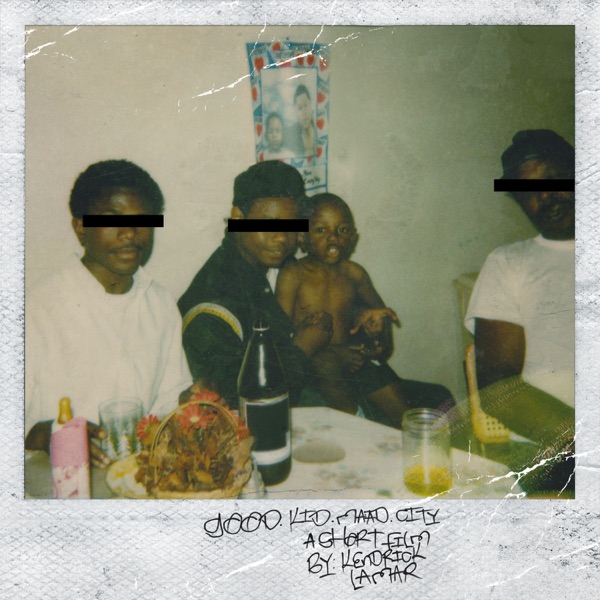
Source / factual notes: Common metadata sources place the single at roughly 74 BPM in 4/4, often usable as 148 BPM double-time. Key databases disagree: some list A-flat/G-sharp major, others identify minor centers such as B minor / C-sharp minor / F-sharp minor depending on version and analysis method. For practical writing, hear it less as a sunny major-key pop song and more as a dark minor/modal trap-R&B loop whose ambiguity helps the hook work both as party chant and warning. The song was written by Kendrick Lamar and Tyler "T-Minus" Williams, produced by T-Minus, and released in 2012 from good kid, m.A.A.d city.
Key: Ambiguous dark tonal center; practical minor/modal loop. If producing from scratch, build around a low, hypnotic minor-feeling synth/bass center and let the vocal melody imply unease. The exact database key matters less than the emotional function: the harmony makes intoxication feel suspended, not triumphant.
Chord Progression / Harmonic Design
- The record is essentially loop-based, not a traditional chord-progression song.
- The harmonic material stays narrow so the listener remains trapped in the ritual: pour, repeat, pressure, numb, repeat.
- Minor/modal color under a chant-like hook lets the chorus pass as a club command while secretly feeling hollow.
- The lack of harmonic release mirrors the subject: alcohol appears to offer escape but actually keeps the narrator circling the same pressure.
- Reusable move: when the lyric is about compulsion, addiction, groupthink, or algorithmic loops, use a loop that feels seductive and stuck at the same time.
Time Signature: 4/4.
Tempo / Feel: Around 74 BPM, with a strong 148 BPM double-time rap feel. The slow pulse gives the track a woozy lean; the double-time subdivisions keep it club-functional and anxious.
Structural Snapshot
- The hook arrives like a drinking-game command, immediately memorable and dangerously easy to chant.
- Verses pull the camera inward: family history, peer pressure, bravado, and private discomfort.
- The vocal contrast matters: public-party voice versus reflective narrator versus inner voice.
- The song's genius is that it can function in the environment it critiques. People can chant it at parties while the verses quietly indict the ritual.
- The extended album version deepens the narrative by connecting intoxication to the larger good kid, m.A.A.d city story world.
Notable Techniques
- Hook-as-trap: The chorus sounds like participation before the listener realizes it is also evidence.
- Temptation language without sermonizing: Kendrick does not simply say "drinking is bad." He shows how it becomes family inheritance, social currency, courage, numbness, and escape.
- Voice splitting: Different vocal tones represent different pressures: crowd, self, conscience, intoxicated alter ego.
- Seductive negative space: The beat is spacious enough to feel cool, but its emptiness also feels lonely.
- Surface/depth contradiction: A club-ready hook carries an anti-alcoholism narrative. That contradiction gives the song cultural reach.
- Concrete ritual detail: The repeated commands create a bodily sequence instead of an essay.
- Moral ambiguity: The narrator understands the appeal. That empathy prevents the song from sounding like a PSA.
Emotional Effectiveness
The track works because it refuses to separate pleasure from damage. The hook gives the listener the dopamine of a party chant, while the verses reveal the pressure underneath: inherited behavior, social expectation, fear, grief, and the desire to disappear into the room. The song is emotionally effective precisely because it does not stand outside the party judging it. It stands inside the party and lets the floor tilt.
That duality is the lesson. If a song condemns a behavior too cleanly, it can sound false; people know temptation has a texture. Kendrick gives the temptation rhythm, melody, and status, then lets the unease seep through the cracks. The result is more durable than a warning because it understands why people keep doing the thing that hurts them.
Production / Arrangement Elements
- Dark, minimal synth atmosphere with enough low-end to work in clubs.
- Repetitive chant hook treated like a crowd ritual.
- Sparse drum programming that leaves room for vocal psychology.
- Layered vocal effects and pitch/texture changes to mark inner conflict.
- Low harmonic movement, high psychological movement.
- The mix keeps Kendrick close enough for confession while the hook remains big enough for public use.
Songwriting Tricks Applicable to Original Work
- Make the hook something the crowd would actually say, then make the verses reveal the cost of saying it.
- Use a seductive arrangement for a dangerous subject; do not make the warning sound obviously medicinal.
- Split the narrator into public voice, private voice, and inner-pressure voice.
- Let repetition become evidence of compulsion.
- Avoid moralizing verbs. Use ritual actions, objects, and social moments.
- For news songs, ask: what phrase are people chanting, clicking, buying, downloading, or repeating that secretly exposes the harm?
### Lyric Reverse-Engineering
1. What is the lyric really about underneath the surface?
Underneath the surface, it is about inherited coping mechanisms and social coercion. Alcohol is the literal subject, but the deeper subject is how a community can normalize self-destruction when pain, masculinity, status, trauma, and belonging all point toward the same ritual. The song is not just "drinking too much." It is about wanting to be accepted, wanting to be numb, and realizing the accepted ritual may be eating you.
2. Likely starting point
Likely hook phrase + contradiction + personal/family memory. The public phrase is simple: drink, repeat, escalate. But the writer's breakthrough was probably realizing that the same phrase could be both a party hook and a diagnosis. From there, family history and peer pressure give the hook moral weight.
3. Framing type
Contrast/double-reading + emotional-residue + character-study + sound-first. The song can be heard as a club track or an anti-addiction narrative. It lives in the tension between those readings. It is also a character study because Kendrick is not describing alcohol from a distance; he is showing a young narrator inside the pressure field.
4. How does the song avoid over-explaining?
It does not give a lecture on alcoholism, statistics, policy, or a clean recovery arc. It gives a chant, a few family/personal clues, and the feeling of being pulled by the room. The chorus does not explain the danger; it performs the dangerous ritual. The verses supply just enough context for the listener to realize the hook has been darker than it sounded.
5. What approach could apply to trending-news songs?
For a trending topic, find the behavior the crowd is already repeating: clicking, refreshing, buying, chanting, posting, betting, swiping, prompting, cancelling, apologizing, subscribing. Make that repeated action the hook. Then use the verses to reveal the pressure, inheritance, incentive, or harm underneath. The trick is not to announce "this trend is bad." Let the trend sing its own seduction, then show the bill arriving.
Practical Galaxy Transmissions Application
Instead of writing "sports betting apps are creating addiction risk," write a dark club-rap/pop track called "One More Line" or "Refresh". The hook is the action: refresh the odds, tap the boost, double the stake, chase the night. Verse 1 shows the fun: group chat, kickoff, tiny miracle, confetti animation. Verse 2 shows the cost: rent reminder, 2:13 a.m. screen glow, deleted bank alert, a kid's cereal box on the counter. The song never needs to say "gambling addiction" because the repeated action reveals it.
Reusable approach discovered: Seductive Ritual Inversion — make the harmful behavior catchy enough to participate in, then use verses and vocal perspective to reveal why the ritual hurts.
Practice Prompt
Pick a headline about a habit people willingly repeat: refreshing an AI feed, betting on games, doomscrolling wildfire maps, buying miracle supplements, checking layoffs on Slack, or posting outrage clips. Write the chorus as 4-6 commands someone in the scene would actually say. Verse 1 shows why the ritual feels good. Verse 2 shows what it costs. Do not moralize; let the loop convict itself.
Connections to Prior Lessons
- Shares double-reading with Al Green's "Love and Happiness," but turns the contradiction into a public chant rather than gospel testimony.
- Shares rumor/pressure repetition with Michael Jackson's "Wanna Be Startin' Somethin'," but slows the engine into intoxicated gravity.
- Shares minimum-hook compression with Nas's "One Mic," but the repeated object/action is destructive rather than redemptive.
- Shares public/private split with Marvin Gaye's "Inner City Blues," but locates the social pressure inside a party ritual instead of a civic lament.
Reference Links
- Swimming Pools (Drank) on Apple MusicSong / recording search
- good kid, m.A.A.d city (Deluxe Version) album referenceAlbum / artwork context
- Kendrick Lamar artist profileArtist background
- Swimming Pools (Drank) on MusicBrainzRecording metadata
- Kendrick Lamar on MusicBrainzArtist metadata