
Songwriting Takeaway
It is the opposite of an explainer song. Fred Rose gives one memory-image, Willie Nelson sings it with almost no ornament, and the entire emotional world appears from what is withheld. This is useful for Galaxy Transmissions because trending-news lyrics often
Chord Progression Visuals
Genre Rotation Check: The latest logged lessons were "Little Red Corvette" (Pop/Funk), "King Kunta" (Hip-Hop/Funk-Rap), and "I've Been Loving You Too Long" (Soul/R&B). No rock/metal streak, but today's prior entry already covered soul, so this bonus lesson deliberately moves into Country / Folk. Checked lesson headers first: this song was not already logged as a full lesson.
Why This Song: It is the opposite of an explainer song. Fred Rose gives one memory-image, Willie Nelson sings it with almost no ornament, and the entire emotional world appears from what is withheld. This is useful for Galaxy Transmissions because trending-news lyrics often get weaker when they try to summarize the whole article.
Key: E major for the Willie Nelson recording in most practical guitar/BPM references. Some vocal/key references differ by arrangement/transposition, but the country-guitar working version is E.
Chord Progression
- Core vocabulary: E - A - B7 (I - IV - V7) with very small passing/walk-up gestures.
- Practical verse shape: mostly E home, brief A color, return to E, then B7 -> E cadence.
- Bridge/contrast area: A -> E -> B7 -> E, still inside I-IV-V language.
- The songwriting lesson is not harmonic novelty. It is harmonic humility: the chords stay almost transparent so the image and vocal timing can carry the grief.
Time Signature: 4/4, usually felt around 117 BPM or half-time near 59-60 BPM. The performance feels slow because the vocal phrases float over a very simple country pulse.
Notable Techniques
- Extreme economy: Short form, few chords, no lyrical sprawl, no big production architecture.
- Image-first memory: The title image is doing the emotional labor. The song does not explain the whole romance; it leaves us with one visual that keeps returning.
- Nelson's behind-the-beat phrasing: Willie delays and bends phrases like someone remembering, not reporting. The time feel creates ache without adding words.
- Sparse Red Headed Stranger arrangement: Acoustic guitar, light rhythm, and open space make the vocal feel like a person alone with a memory.
- Country-gospel cadence: The B7-to-E resolution gives closure, but the lyric's memory keeps reopening the wound.
- Bridge as lifetime zoom-out: The song briefly widens from a goodbye scene into years of memory and imagined reunion, then returns to the same core image.
- No drum-club pressure: The song trusts stillness. For news songs, this is a reminder that not every serious story needs cinematic escalation.
Emotional Effectiveness
- The lyric is devastating because it does not litigate the breakup. No blame, no argument, no scene-by-scene timeline.
- The title image fuses beauty and sorrow: eyes, tears, weather, farewell, and distance in one frame.
- The plain I-IV-V harmony lets the listener bring their own memory into the song.
- The melody feels close to speech, but Nelson's timing turns speech into wound.
- The song's smallness makes it feel true. It sounds like a private memory accidentally preserved, not like a performance trying to prove importance.
Songwriting Tricks Applicable to Original Work
- Start with one unforgettable afterimage, not the whole story.
- Use I-IV-V or another transparent progression when the lyric-image is strong. Complexity can steal focus.
- Let the chorus/title return like a memory flash, not like a slogan.
- Keep the narrator from explaining motives. Let the picture imply the feeling.
- Use a bridge to widen time -- years later, another room, an imagined future -- then return to the original image.
- Leave blame offstage when grief is the stronger emotion.
- For Suno: ask for sparse country-folk, intimate male vocal, E major, 4/4 half-time feel, acoustic guitar, light bass, brushed/snare minimalism, behind-the-beat phrasing.
Lyric Reverse Engineering
1. What the lyric is really about underneath:
Under the surface farewell, it is about how memory compresses a whole relationship into one recurring image. The real subject is not the event itself; it is the picture that survives after the event has taken everything else with it.
2. Likely starting point:
Image/title + emotional residue. Fred Rose likely began from the central picture: blue eyes, rain, goodbye. The phrase already contains character, weather, mood, and ending. Willie Nelson's version then found the emotional center by stripping away anything that would compete with that picture.
3. Framing mode:
Minimal + emotional-residue + single-image elegy + literal/metaphoric double-reading. The image can be literal, but it also works as memory itself: the rain is weather and grief; the eyes are the person and the trace left behind.
4. How it avoids over-explaining:
It refuses to answer the obvious questions. We do not get the argument, the biography, the reason for separation, or the full aftermath. The song gives a goodbye image, a lifetime of remembering, and a hope/afterlife hint. That restraint makes the listener complete the story.
5. Trending-news application:
Use this when the headline is emotionally heavy and a recap would feel exploitative or dull: disaster aftermath, a factory closure, a courtroom loss, a community vigil, an AI layoff, a hospital wait, or a beloved public figure's passing. Do not sing the article. Find the one image left in someone's mind: a wet sign, a boxed mug, a porch light, an empty chair, a badge on a dresser, a phone still glowing. Build the song around that image and let the facts stay mostly offstage.
Reusable Pattern Extracted: Single Afterimage Elegy
- Find the one picture that remains after the event: eyes in rain, badge in a box, porch light after evacuation, empty chair after a closing.
- Keep harmony and structure simple so the image can gather weight through repetition.
- Use a short bridge to widen time, then return to the image.
- Best for grief, aftermath, closures, public losses, disaster recovery, layoffs, or any story where stillness is more truthful than explanation.
Application to Our Work
- AI layoffs: "Badge in the Rain" -- a worker sees the old badge on the dashboard while the demo livestream plays inside the building.
- Disaster recovery: "Porch Light in the Flood" -- one light still burning above the waterline, verses only imply the evacuation.
- Healthcare wait: "Bracelet on the Chair" -- a hospital wristband and a dead phone carry the whole story.
- Creator-rights story: "Sketchbook by the Screen" -- one physical notebook beside the glowing prompt box.
- Practical lyric rule: if the first draft sounds like a news recap, delete 80% of the facts and ask, "What image would the person remember ten years later?"
Source Checks
- SongBPM lists Willie Nelson's recording in E major, 4 beats per bar, about 117 BPM / half-time 59 BPM: https://songbpm.com/%40willie-nelson/blue-eyes-crying-in-the-rain
- GoodGuitarist teaches the song as a straightforward E / A / B7 1-4-5 country progression with a simple 4-beat count: https://goodguitarist.com/youtube-post/blue-eyes-crying-in-the-rain-willie-nelson-guitar-tutorial/
- Reference overview: written by Fred Rose; Willie Nelson's 1975 Red Headed Stranger version became a key comeback recording and is known for its spare, uncluttered country arrangement: https://en.wikipedia.org/wiki/Blue_Eyes_Crying_in_the_Rain
Reference Links
- Blue Eyes Crying in the Rain on Apple MusicSong / recording search
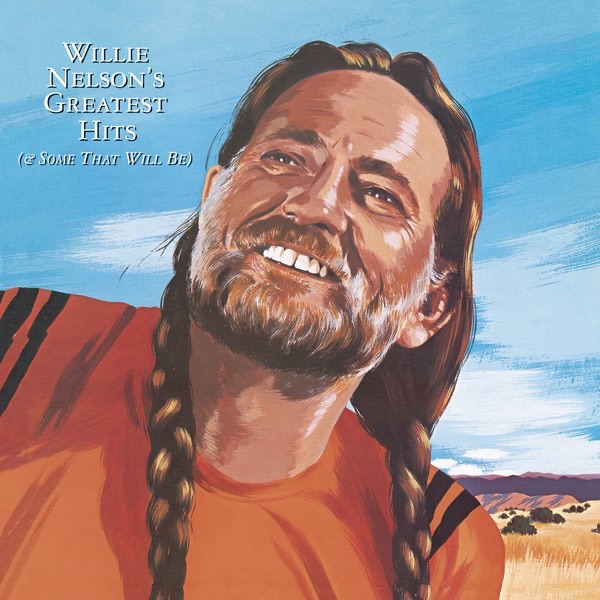
- Greatest Hits (& Some That Will Be) album referenceAlbum / artwork context
- Willie Nelson artist profileArtist background
- Blue Eyes Crying in the Rain on MusicBrainzRecording metadata
- Willie Nelson on MusicBrainzArtist metadata